Training Coordinator Resume Examples: what gets the call
Write a Training Coordinator Resume That Shows You Run the Calendar
By Mustafa Tarabya, founder of CVBooster · Published · Updated
Training coordinator resume examples with LMS keywords, scheduling and compliance proof points, and a guide to every section hiring managers read.
Sample resumes for a training coordinator
The same training coordinator content laid out in three CVBooster templates, so you can see what the finished document looks like before you write a word.
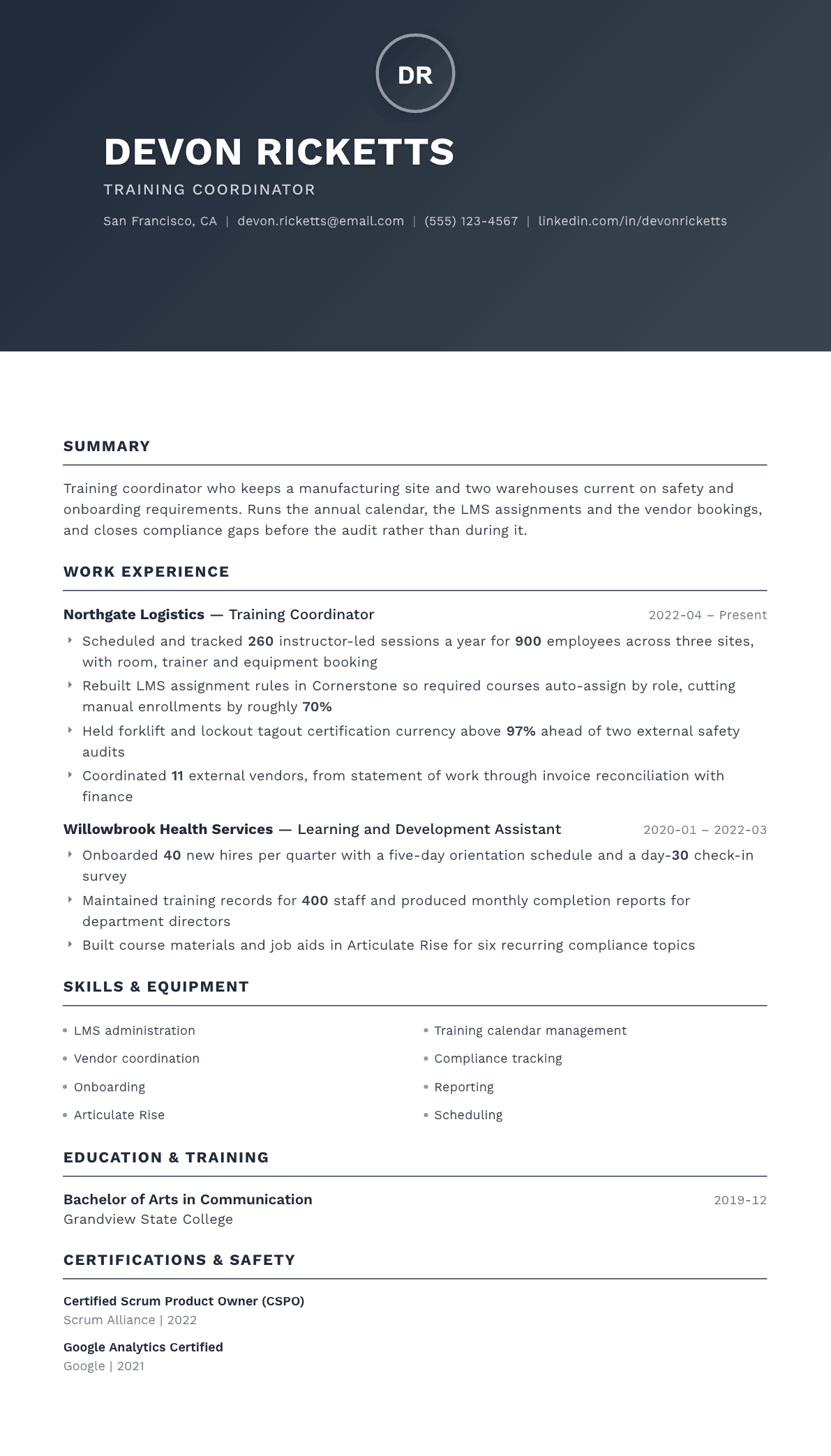
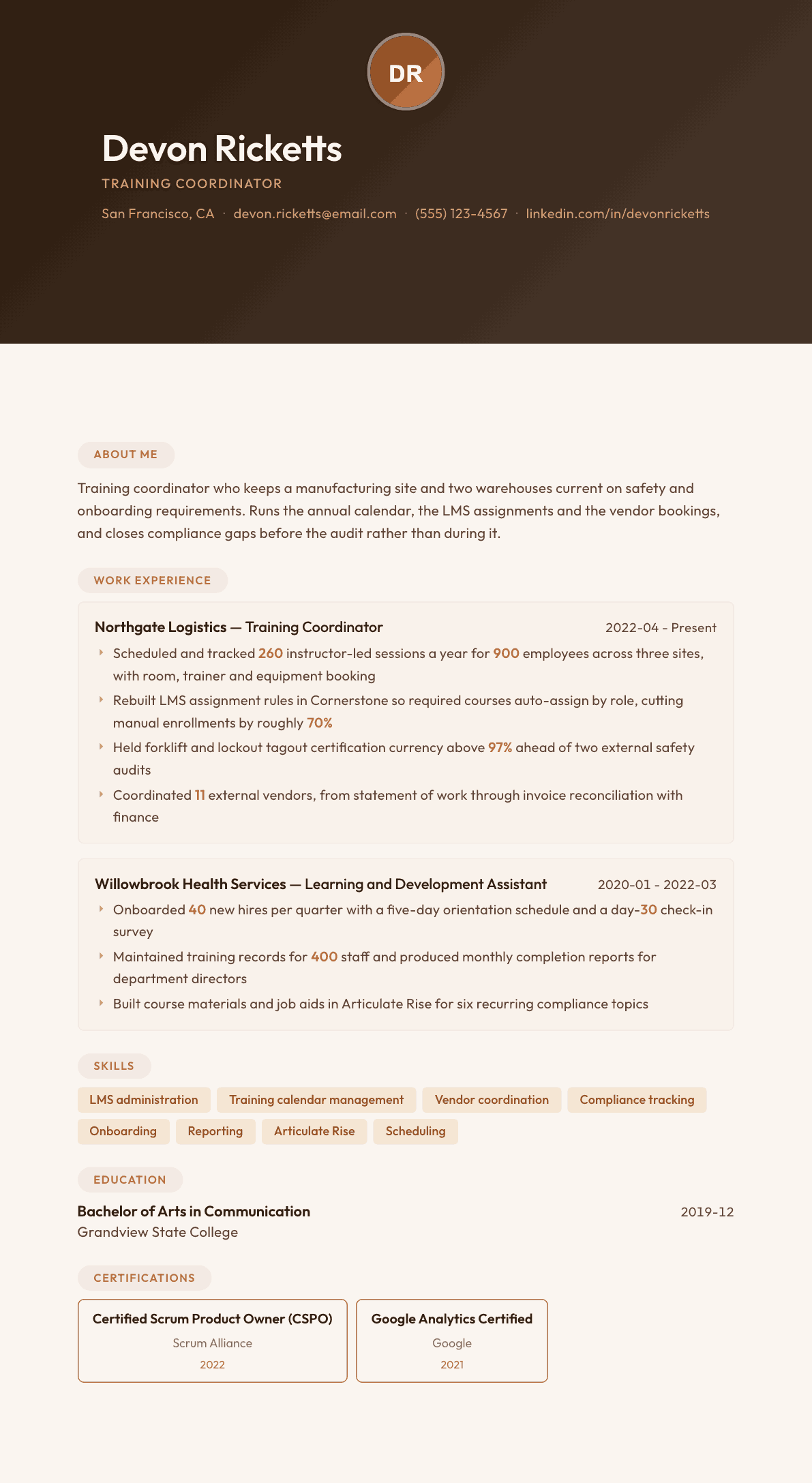
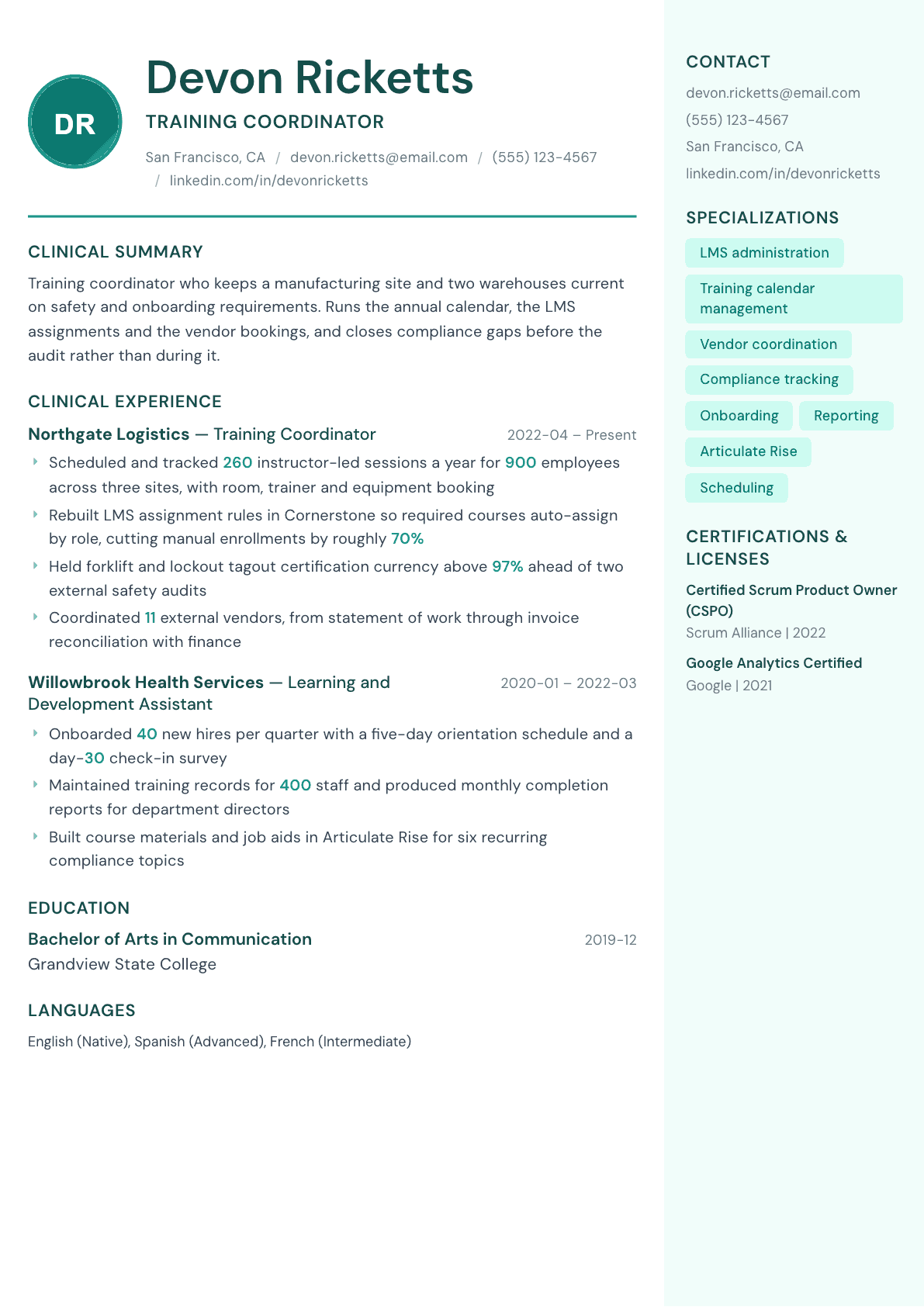
Example Training Coordinator summary
Training coordinator with four years running the learning calendar for a multi-site logistics and healthcare employer. Owns LMS assignment rules, instructor and room scheduling, vendor contracts and completion reporting for nine hundred employees. Keeps safety certification currency high enough to clear external audits without a scramble, and turns messy training records into monthly reports directors can act on.
Skills to list on a Training Coordinator resume
- LMS administration
- Cornerstone OnDemand
- Workday Learning
- Training calendar management
- Vendor management
- Compliance tracking
- Onboarding programs
- Completion reporting
- Articulate Rise
- Session logistics
- Records management
- Budget tracking
- Survey and feedback collection
- Cross-department scheduling
What actually gets this resume read
- Name the learning management system by product, since LMS administration in Cornerstone reads differently from Workday Learning.
- Quantify the calendar you own: sessions per year, learners served, sites covered and how many vendors you manage.
- Show compliance results with completion and currency rates, because audits are the reason many of these roles exist.
- Separate coordination from design work so a manager knows whether you build content or run the logistics behind it.
- Include the reporting you produce and who reads it, since coordinators are often the source of leadership dashboards.
- Add budget and invoice handling if you have it, because vendor spend is a common step up from coordinator to specialist.
How to write a training coordinator resume
A training coordinator keeps the machinery running: the calendar, the room, the trainer, the roster, the record and the report that proves the record is right. Hiring managers screen this resume for reliability under volume, because the cost of a missed compliance deadline lands on them.
Applicants for this role tend to undersell it by writing soft duties such as supported training initiatives. That phrasing hides the two things a manager actually needs to know: how many sessions and learners you handled, and whether the completion numbers held up when an auditor asked.
This guide walks through the sections in the order a learning and development manager reads them, with sample summaries for a first coordinator job through a senior one, before and after bullets built from real coordination work, and answers to the questions people ask when moving from administration into learning.
Format: one page, systems named, numbers visible
One page is right for this role until you have eight or more years. Reverse-chronological, single column, no icons. Corporate applicant tracking systems handle plain layouts best, and a coordinator resume that arrives with broken formatting undercuts the exact quality being hired for.
Put the learning management system by product name in the header skills line or immediately under the summary. Many recruiters filter on that one word before reading anything else, because migrating a coordinator between platforms costs weeks.
- Header: name, city, phone, email, and the platforms you administer.
- Order: summary, experience, systems and tools, certifications, education.
- People coming from scheduling or office administration should add a short transferable-skills line rather than a functional format.
Experience: the calendar you own and its scale
Open each job with the scope: how many employees the training served, how many sites, how many instructor-led sessions a year, and whether delivery was classroom, virtual or blended. A manager reading that line knows within seconds whether you have handled their volume.
Then write the operational bullets. Room and equipment booking, trainer assignment, enrollment and waitlist management, cancellation handling, materials printing and shipment, catering, travel, and the follow-up chasing that turns a scheduled seat into a completed record. This is unglamorous work and describing it precisely is what proves competence.
- Sessions per year and learners per session, not just an annual headcount.
- Number of sites, time zones or shifts you coordinated across.
- Vendors managed, from booking through invoice reconciliation.
Compliance and records: the audit is the point
In manufacturing, healthcare, transportation and financial services, a coordinator exists largely so that required training is complete and provable. Say which requirements you tracked, such as safety certifications, licensure renewals, annual regulatory modules or role-based onboarding, and report currency or completion rates with the population they cover.
Mention any audit you supported and how it went. Passing an external safety audit with no major findings is a concrete, checkable outcome, and it separates a coordinator who keeps records from one who keeps records that hold up.
Systems: administration is a skill, not a login
Name the platform and say what you did inside it. Building assignment rules, configuring curricula, creating learning paths, bulk enrolling from a spreadsheet, fixing completion errors, and running scheduled reports are all administration. Simply being a user is not, and interviewers can tell the difference in one question.
List the surrounding tools too: the human resources information system your roster comes from, the scheduling or calendar system, the survey tool, the reporting layer, and any authoring tool you touch when a job aid needs updating.
Reporting: who reads your numbers
Coordinators are usually the source of the completion dashboard leadership sees. Say what you produce, how often, and who receives it: monthly completion reports to department directors, a quarterly compliance summary to the safety committee, or a weekly enrollment status to site managers.
If you improved a report, describe the before and after. Replacing a hand-built spreadsheet with a scheduled system report is a small change that saves hours every month and reads as initiative rather than maintenance.
Training Coordinator resume summary examples
Moving in from administration
Administrative professional with three years scheduling for a 200-person operations team, moving into learning coordination. Has managed classroom bookings, vendor invoices and attendance records, and completed a learning management system administrator course. Organized under volume and comfortable chasing overdue completions without friction.
Three years coordinating
Training coordinator supporting 900 employees across three sites, scheduling 260 instructor-led sessions a year and administering assignment rules in the learning management system. Tracks safety certification currency ahead of external audits and produces the monthly completion report read by department directors.
Senior coordinator
Senior training coordinator owning the annual calendar for a multi-site employer, eleven external vendors and the training budget reconciliation. Rebuilt automated role-based enrollment, onboards two new coordinators, and serves as the records contact during regulatory audits and internal quality reviews.
Work experience bullets: before and after
Before: Scheduled training sessions for employees.
After: Scheduled 260 instructor-led sessions a year for 900 employees across three sites, coordinating rooms, trainers, equipment and shift coverage with site supervisors.
Volume and the coordination points show the real complexity behind a word that sounds simple.
Before: Managed the LMS.
After: Rebuilt learning management system assignment rules so required courses auto-assign by job code, removing most manual enrollment work each month.
Describing the configuration change proves administration rather than day-to-day use of the platform.
Before: Tracked training compliance.
After: Held forklift and lockout tagout certification currency above the site target through two external safety audits, both closed with no major findings.
Naming the requirements and the audit result gives a checkable outcome instead of an activity.
Before: Worked with training vendors.
After: Coordinated eleven external vendors from statement of work through delivery and invoice reconciliation with finance, keeping every engagement inside the approved purchase order.
The full cycle from contract to invoice shows ownership beyond booking a trainer.
Before: Created reports on training completion.
After: Replaced a hand-built completion spreadsheet with scheduled system reports delivered monthly to eleven department directors, cutting several hours of manual work each cycle.
A before and after with a named audience turns routine reporting into visible process improvement.
Hard skills
- Learning management system administration
- Training calendar management
- Enrollment and waitlist management
- Compliance and certification tracking
- Vendor coordination and invoicing
- New hire onboarding logistics
- Completion and attendance reporting
- Materials and job aid preparation
- Survey and feedback collection
- Records retention
- Budget and purchase order tracking
- Virtual classroom setup
Soft skills
- Follow-through on overdue items
- Calm rescheduling under short notice
- Clear reminder communication
- Working across departments and shifts
- Accuracy in record keeping
- Discretion with employee records
Certifications worth listing
- Associate Professional in Talent Development (APTD) (Association for Talent Development)
- Certified Professional in Talent Development (CPTD) (Association for Talent Development)
- SHRM Certified Professional (SHRM-CP) (Society for Human Resource Management)
- Certified Meeting Professional (CMP) (Events Industry Council)
Mistakes that cost training coordinator candidates the interview
- Writing supported training initiatives instead of the session counts, learner numbers and sites you actually covered.
- Saying LMS without the product name, when that word is often the first filter applied to the resume.
- Leaving out compliance results, which is the reason many of these positions are funded at all.
- Hiding vendor and budget work, the exact experience that moves a coordinator to specialist or manager.
- Claiming course design when the work was logistics, a distinction interviewers probe within two questions.
- Sending a decorated two-column layout that parses badly in the systems this role is supposed to master.
Training Coordinator resume questions
What is the difference between a training coordinator and a training specialist?
A coordinator runs the operation: calendar, enrollments, vendors, records and reporting. A specialist designs and delivers the content itself. Many coordinators do some design work, so state clearly which half of the job each bullet describes.
Do I need experience with a specific learning management system?
It helps enormously, because migrating platforms costs an employer weeks. If your platform differs from the posting, name yours, describe the administration you did inside it, and say you have configured curricula and assignment rules, which transfers across products.
How do I move into training coordination from an administrative job?
Lead with scheduling volume, vendor handling and records accuracy, since those are the same muscles. Add a platform administrator course and any onboarding or orientation support you have run, then apply into industries where compliance training drives the role.
Should I include the training budget I handled?
Yes, described in scope rather than a raw figure: vendor contracts reconciled, purchase orders tracked, travel and catering handled. Budget exposure is the clearest signal that you are ready for a specialist or manager posting rather than another coordinator seat.
How do I show value if my company never measured training results?
Report the operational measures you controlled: on-time session delivery, fill rates, completion currency, audit outcomes and turnaround on record corrections. Those are legitimate coordinator outcomes and no reasonable hiring manager expects you to own business impact.