Glazier Resume Examples: free score, then the gap list
Build a Glazier Resume That Shows Curtain Wall Skill
By Mustafa Tarabya, founder of CVBooster · Published · Updated
A glazier resume sample with curtain wall, storefront and glazing system keywords, plus a guide to writing bullets a glazing contractor believes.
Sample resumes for a glazier
The same glazier content laid out in three CVBooster templates, so you can see what the finished document looks like before you write a word.
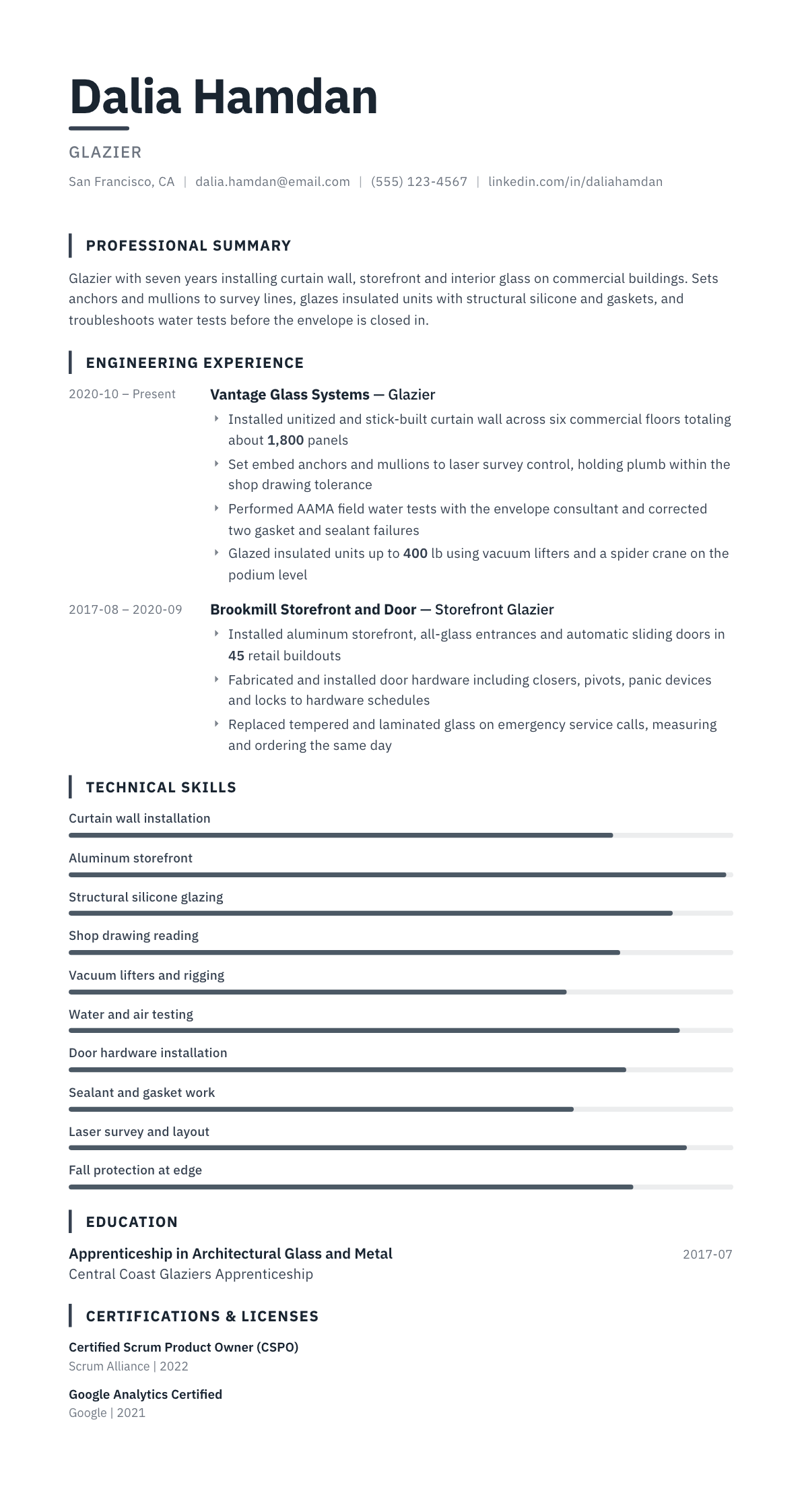
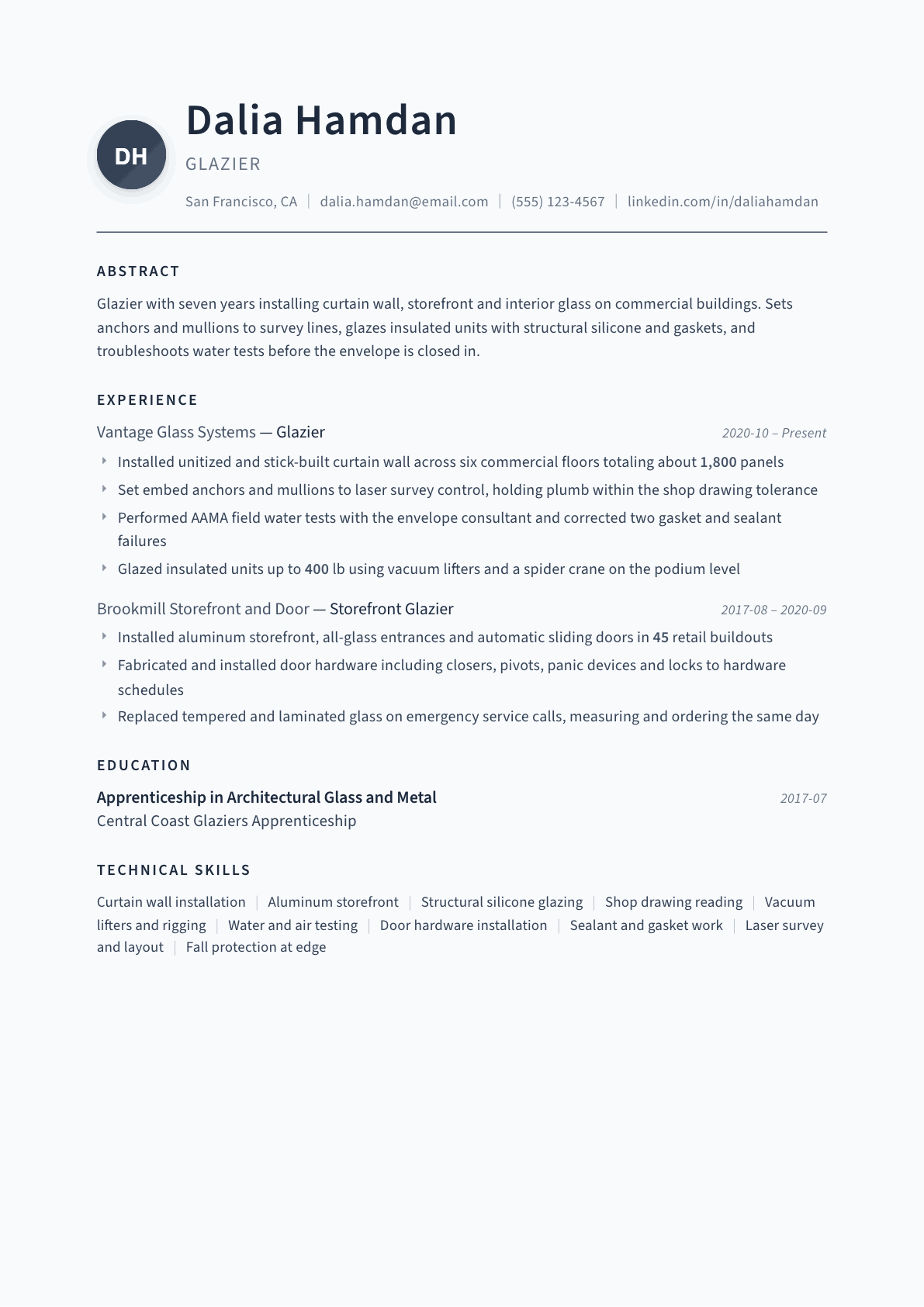
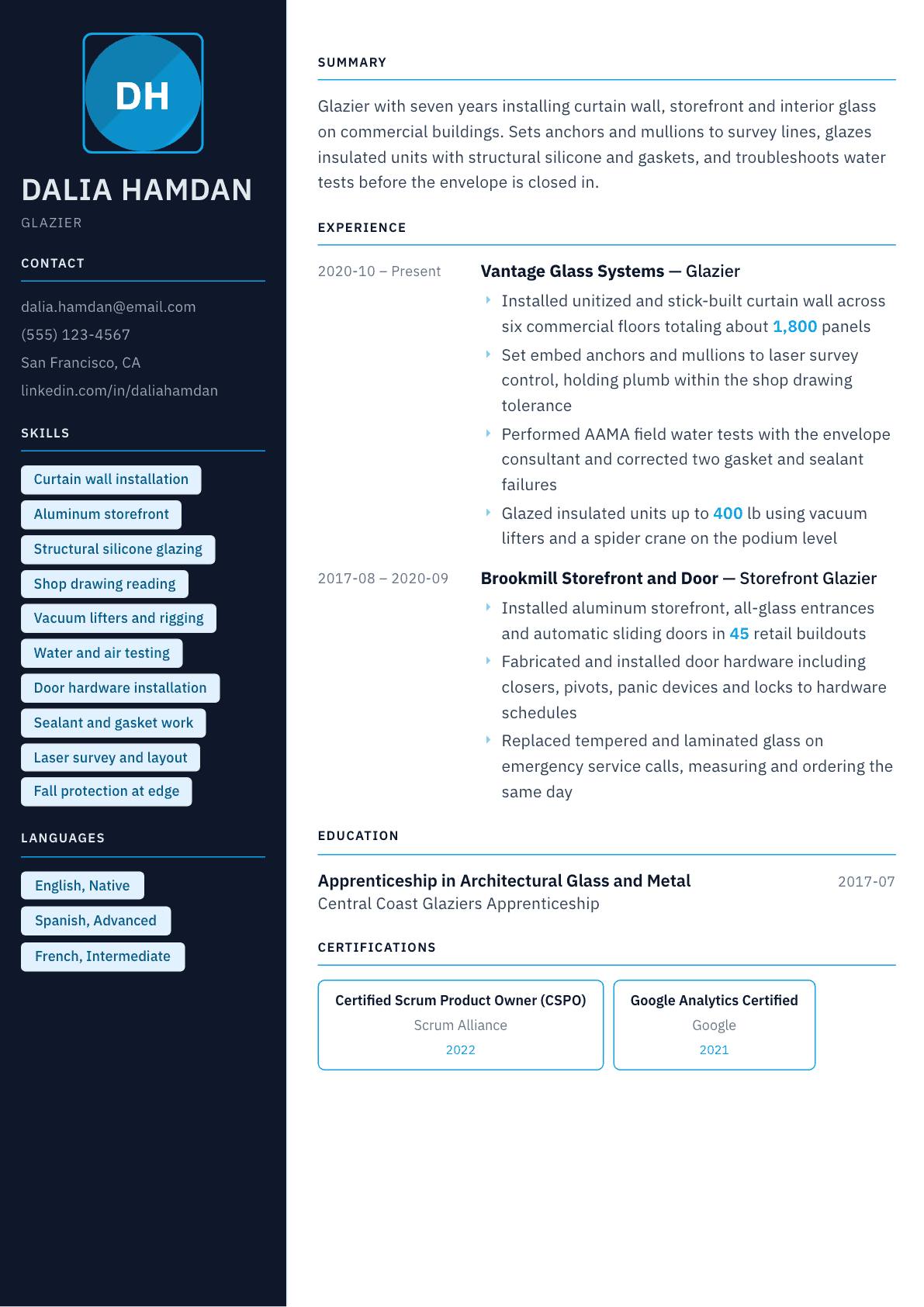
Example Glazier summary
Glazier with seven years installing curtain wall, aluminum storefront and interior glass on commercial projects. Sets anchors and mullions to survey control from shop drawings, glazes insulated units with vacuum lifters, and seals systems that pass field water testing. Also hangs and adjusts entrance doors and hardware, and works safely at the building edge on lifts.
Skills to list on a Glazier resume
- Curtain wall systems
- Unitized glazing
- Stick-built glazing
- Aluminum storefront
- Structural silicone glazing
- Insulated glass units
- Gasket and wet seal work
- Anchor and mullion setting
- Shop drawing interpretation
- Vacuum lifter operation
- Field water testing
- Door hardware and closers
- Glass cutting and fabrication
- Boom and scissor lift work
- Edge fall protection
- Sealant application
What actually gets this resume read
- Separate curtain wall, storefront and interior glass, because glazing contractors bid and staff them differently.
- Say whether the systems were unitized or stick-built, since erection sequence and crew skill differ on each.
- Mention water and air testing, as envelope performance is what a general contractor holds a glazier accountable for.
- Name the lifting equipment you operate, from vacuum cups and spider cranes to material hoists and boom lifts.
- List door hardware experience, because storefront work often rides on being able to hang and adjust the entrance.
- Include shop drawing and survey work, since setting anchors to control lines is what keeps a facade plumb.
How to write a glazier resume
A glazing contractor lives with his mistakes for years, because glass is the visible skin of the building and water finds every gap in it. When he reads a resume he is trying to establish two things: whether you can set a facade plumb to survey control, and whether the systems you install pass a water test with the envelope consultant standing there.
The trade also splits in ways outsiders miss. Curtain wall erection, storefront and entrance work, interior glass and mirrors, and glass replacement service are four different daily lives with different tools, heights and clients. Saying which one you come from is the single most useful sentence on the page.
This guide covers the structure of a glazier resume, what belongs in each section, three summaries covering an apprentice, a journey-level glazier and a foreman, five rewritten bullets, and the questions glaziers actually ask when they write.
Format: one page, branch of glazing stated first
Reverse-chronological, one page, no columns. Right under your name, say whether your work is curtain wall, storefront and entrances, interior glass, or service and replacement, and name the ones you can genuinely cover. A glazing contractor staffing a facade crew will not read past a summary that leaves this open.
Add your union local if you have one, your lift and equipment cards, and whether you travel. Facade work concentrates in a few large projects at a time, so travel availability changes how useful you are to a company with three cities in its backlog.
- Header: name, branch of glazing, city and state, phone, email, local, travel availability.
- Order: summary, safety and equipment cards, work history with projects, systems and skills.
- Apprentices list hours completed and the training center above the work history.
Summary: systems, scale and how the glass got up there
Name the systems: unitized curtain wall, stick-built curtain wall, window wall, aluminum storefront, all-glass entrances, structural silicone glazing, point-supported glass, skylights. Then the scale, in floors or panel counts, because the difference between a six-story facade and a strip mall storefront is the whole job.
Add the handling method. Vacuum lifters, spider cranes, monorail and davit systems, boom lifts and material hoists all say something about the size of unit you have set and the risk you have worked around. A glazier who has set heavy insulated units by rig is a specific hire.
Experience: anchors, sequence and testing
For each employer give the buildings, your role and the systems. Then bullets with detail. Setting embed anchors and mullions to laser survey control, holding plumb inside the shop drawing tolerance, sequencing unitized panels floor by floor, and sealing the perimeter to the air barrier are all things a facade superintendent recognizes as real work.
Testing is the strongest section you can write. Field water testing with the envelope consultant, air infiltration testing, mockups built before production started, and the corrections you made when a test failed. Any glazier who has been through a failed test and fixed the gasket or the wet seal has experience the contractor is buying.
On storefront and entrance work, describe the hardware. Closers, pivots, panic devices, electric strikes, automatic operators and thresholds are where storefront jobs stall, and a glazier who hangs and adjusts doors properly saves the contractor a return trip.
- System type, panel or unit count, and building height.
- Anchor and mullion setting method, including the survey control you worked from.
- Testing performed, who witnessed it, and what you corrected.
- Lifting equipment operated and the heaviest unit you have set.
Shop drawings, sealants and safety at the edge
Say that you work from shop drawings and name what you take off them: anchor locations, mullion layout, glass sizes and types, gasket schedules and sealant joints. Drawing literacy is what lets a glazier work without a foreman standing behind him, and most resumes never mention it.
Sealant work deserves a line of its own. Structural silicone, wet seals, backer rod and joint dimensions, surface preparation and primer, and adhesion testing are the details that decide whether a facade stays watertight. Then describe your edge work: leading edge tie-off, controlled access zones, and how glass was protected and staged on the deck.
Keywords a glazing contractor searches for
Mirror the postings exactly: glazier, curtain wall, unitized, stick-built, window wall, aluminum storefront, all-glass entrance, structural silicone glazing, insulated glass unit, tempered and laminated glass, shop drawings, embed anchors, mullion, gasket, wet seal, field water test, vacuum lifter, boom lift, door hardware. Use the ones you can back with a project.
Glazier resume summary examples
Glazier apprentice
Glazier apprentice with 3,200 hours on storefront and interior glass, cutting and installing tempered and laminated units under a journey glazier. Sets frames, applies sealant to joint dimension, hangs doors and adjusts closers, and holds boom and scissor lift training.
Journey-level glazier
Glazier with seven years installing curtain wall, storefront and interior glass on commercial buildings. Sets embed anchors and mullions to laser survey control, glazes insulated units up to 400 lb using vacuum lifters, and has passed field water tests alongside the envelope consultant.
Glazing foreman
Glazing foreman with fifteen years leading facade crews on high-rise and institutional projects. Plans unitized erection sequence with the hoisting contractor, runs mockups and field testing, manages shop drawing coordination with the fabricator, and trains apprentices on sealant and anchor work.
Work experience bullets: before and after
Before: Installed curtain wall on a commercial building.
After: Installed unitized and stick-built curtain wall across six commercial floors totaling about eighteen hundred panels, sequencing each level with the hoisting crew.
Panel count, system type and the coordination detail let a facade superintendent judge the scale you have actually worked at.
Before: Made sure the frames were straight.
After: Set embed anchors and mullions to laser survey control, holding plumb within the shop drawing tolerance across every elevation before glazing began.
Naming the control method and the tolerance shows a measured process rather than a visual check a foreman would need to repeat.
Before: Fixed leaks when they were found.
After: Performed field water testing with the envelope consultant and corrected two gasket and wet seal failures before the floors were closed in.
Testing with a witness and describing the correction is the clearest proof a glazier can offer that his facade holds water out.
Before: Installed doors and hardware.
After: Installed aluminum storefront, all-glass entrances and automatic sliding doors in 45 retail buildouts, fitting closers, pivots, panic devices and locks to the hardware schedule.
Hardware to a schedule is the part of storefront work that generates callbacks, so listing the devices proves you finish an entrance properly.
Before: Used equipment to lift heavy glass.
After: Glazed insulated units up to 400 lb with vacuum lifters and a spider crane on the podium level, staging glass so no unit was handled twice.
Unit weight, the rig and the staging plan together show real handling experience rather than having stood near a lift.
Hard skills
- Unitized curtain wall installation
- Stick-built curtain wall and window wall
- Aluminum storefront systems
- All-glass entrances and interior glass
- Structural silicone glazing
- Insulated, tempered and laminated glass
- Embed anchor and mullion setting
- Shop drawing interpretation
- Laser survey and layout control
- Gasket, wet seal and sealant application
- Field water and air infiltration testing
- Vacuum lifters and spider crane rigging
- Door hardware installation and adjustment
- Boom and scissor lift operation
- Leading edge fall protection
Soft skills
- Careful handling under pressure
- Coordination with hoisting and envelope teams
- Precision over speed where it matters
- Clear reporting of test failures
- Training apprentices on sealant work
Certifications worth listing
- Certified Glazier (National Glass Association)
- InstallationMasters Installer Certification (Fenestration and Glazing Industry Alliance)
- OSHA 30-Hour Construction (OSHA Outreach Training Program)
Mistakes that cost glazier candidates the interview
- Not saying which branch of glazing you come from, so a facade contractor cannot tell curtain wall time from storefront time.
- Leaving out water and air testing, which is the strongest external evidence a glazier has that his work performed.
- Describing glass installation without unit weight or handling method, which hides the risk and skill involved.
- Skipping shop drawing work, even though drawing literacy is what allows a glazier to be left alone on an elevation.
- Treating sealant as an afterthought when joint dimension, primer and adhesion decide whether the facade stays dry.
- Omitting door hardware experience, which is often the deciding factor on storefront and retail buildout crews.
Glazier resume questions
What separates a curtain wall glazier from a storefront glazier on paper?
Height, system and handling. Curtain wall resumes carry panel counts, floors, survey control and testing. Storefront resumes carry buildout counts, entrance hardware and service work. Naming which one you are keeps your resume in the right pile.
Should I list field water testing on my resume?
Yes, because it is the one moment when someone independent verifies a glazier work. Naming the test, the consultant or contractor who witnessed it, and any correction you made turns a claim about quality into a documented event.
How much detail should I give about lifting equipment?
Enough to show the size of unit you can handle. Name the rigs you have operated, the heaviest glass you have set and the setting you did it in. Companies with large insulated units struggle to staff that work, so it is worth stating plainly.
Is glass replacement service work worth including?
Include it if you did it well, since service work proves you can measure, order and install without a project team around you. Describe the response times and the range of glass you replaced, because service divisions hire on exactly that independence.
What if my glazing experience is mostly residential windows?
Highlight anything transferable: sealant work, flashing at openings, hardware adjustment and working from drawings. Then add lift training and a safety card, and state clearly that you are moving into commercial glazing so the reader is not left guessing.
Related resume examples
- Carpenter Resume example
- Construction Manager Resume example
- Ironworker Resume example
- Scaffolder Resume example
- Cabinet Maker Resume example
- Tile Setter Resume example