Scaffolder Resume Examples: free ATS score and gap list
Create a Scaffolder Resume That Proves Safe Access Work
By Mustafa Tarabya, founder of CVBooster · Published · Updated
A scaffolder resume sample with system scaffold, load class and inspection keywords, plus a guide to writing bullets a site safety lead trusts.
Sample resumes for a scaffolder
The same scaffolder content laid out in three CVBooster templates, so you can see what the finished document looks like before you write a word.
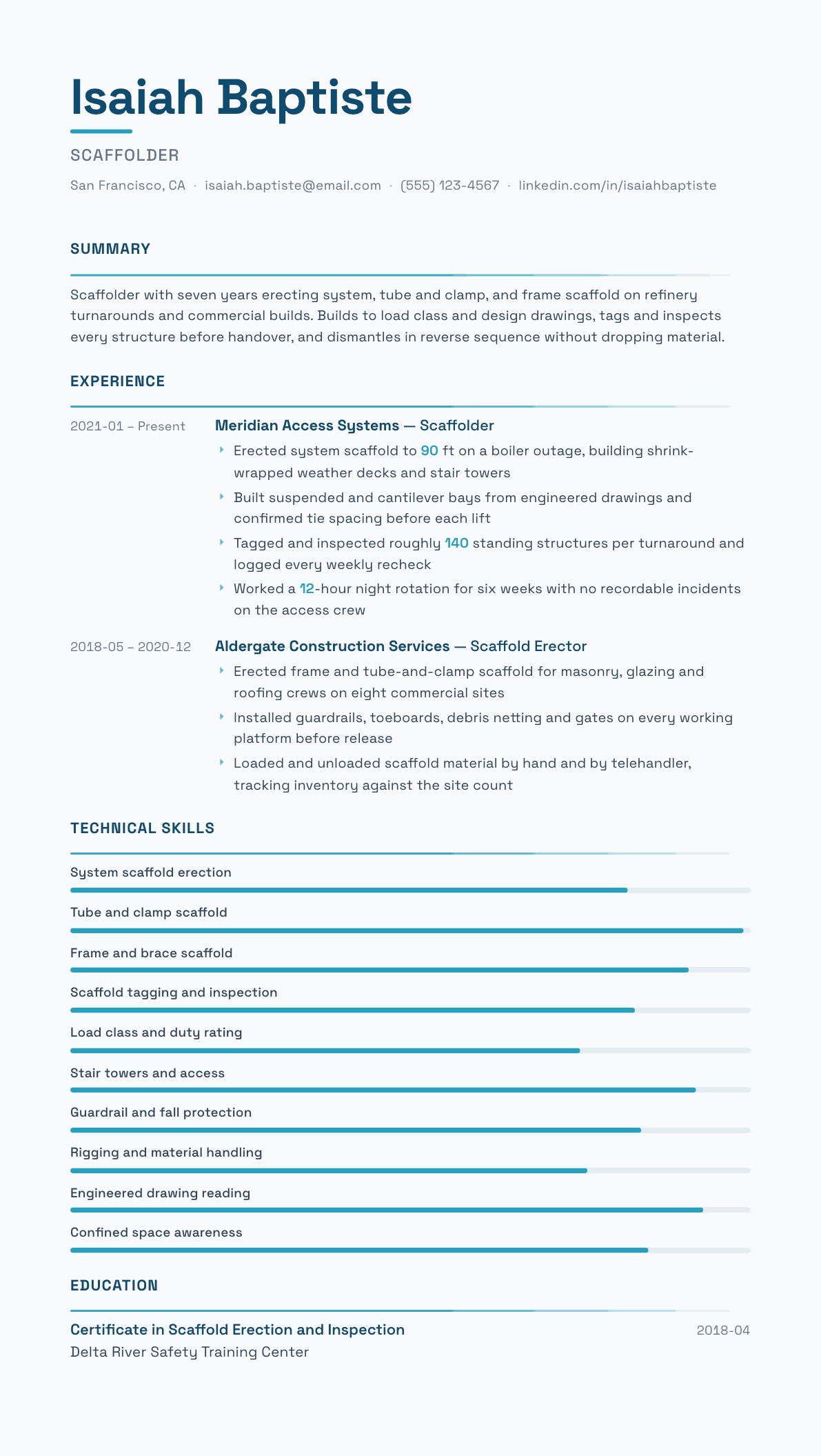
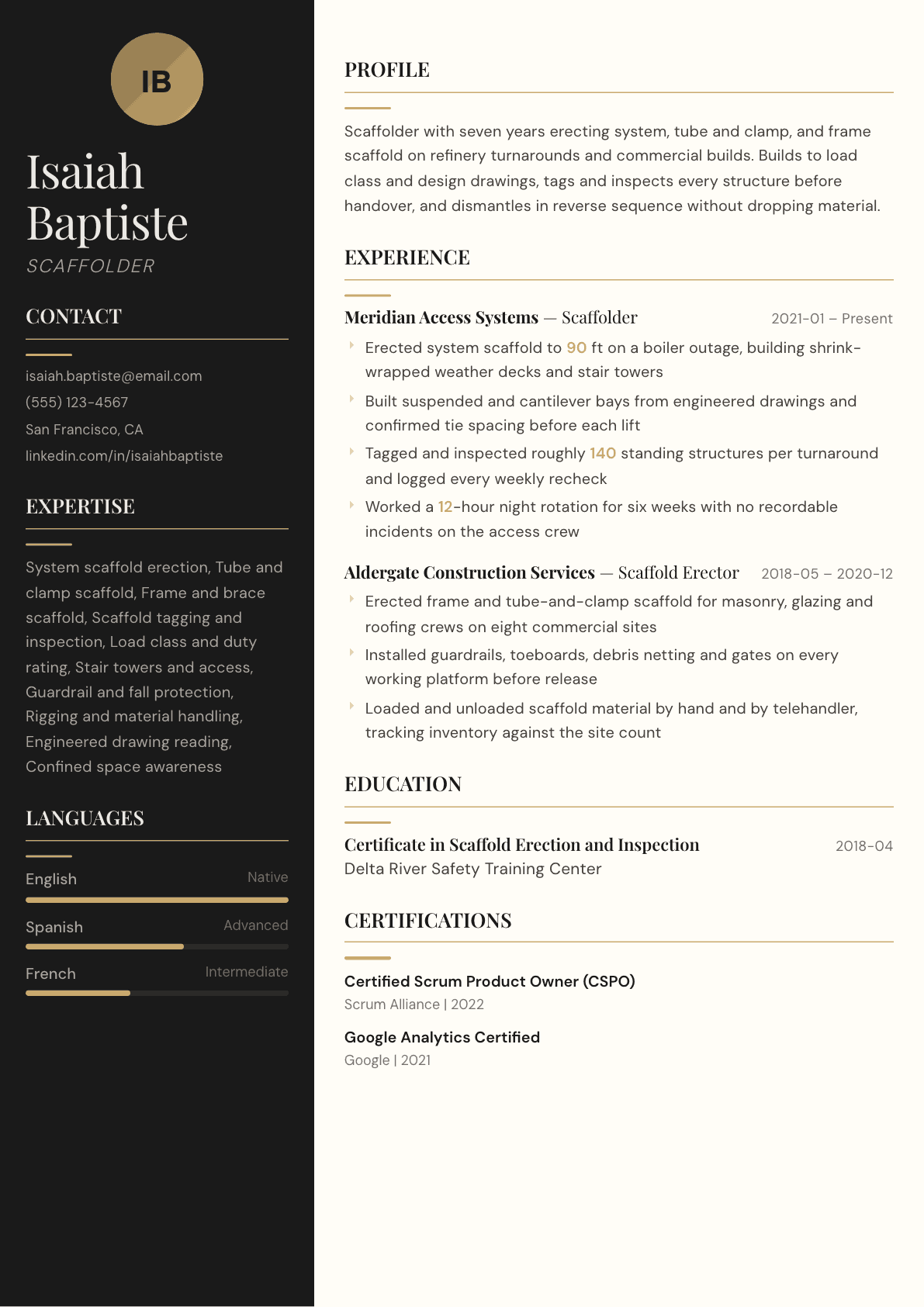
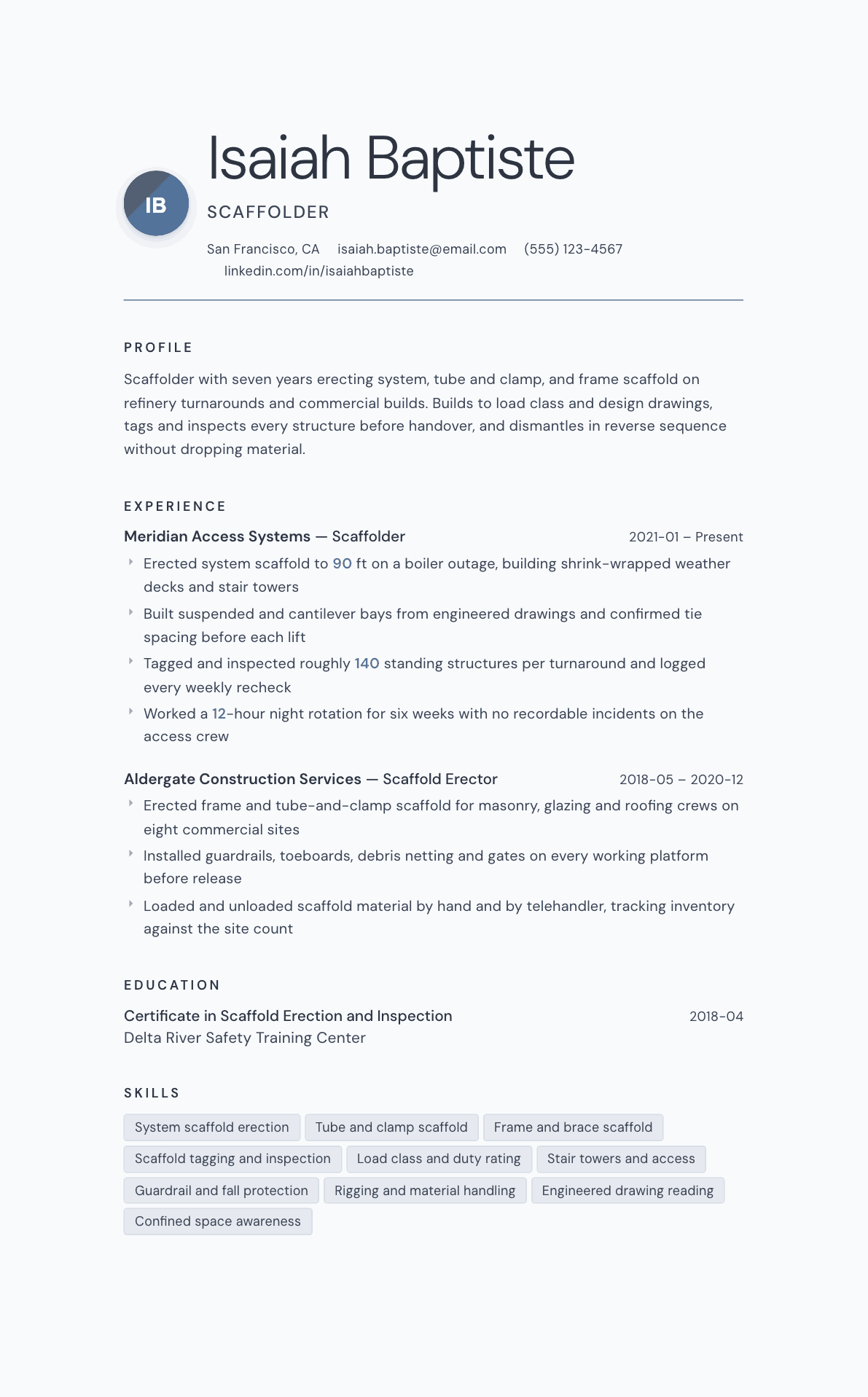
Example Scaffolder summary
Scaffolder with seven years on refinery turnarounds and commercial construction, erecting system, tube and clamp, and frame scaffold to engineered drawings. Builds stair towers, weather decks and cantilever bays, then tags and inspects each structure before handover. Works night rotations on outage schedules and dismantles in sequence without dropped material or damaged components.
Skills to list on a Scaffolder resume
- System scaffold erection
- Tube and clamp assembly
- Frame scaffold
- Suspended and cantilever bays
- Stair tower construction
- Scaffold inspection and tagging
- Duty and load ratings
- Tie and bracing patterns
- Guardrails and toeboards
- Debris netting and weather decks
- Material handling and rigging
- Engineered scaffold drawings
- Fall protection systems
- Dismantle sequencing
- Site permit systems
What actually gets this resume read
- Name the scaffold systems you erect, because a system scaffold hand and a tube-and-clamp hand are not interchangeable.
- State the height and load class you have built to, since duty ratings decide which crews can use the structure.
- Mention tagging and inspection duties, because a competent person designation carries real weight on a job site.
- Include industrial turnaround work separately, as outage schedules and permits differ from commercial construction.
- List your safety training with the issuing body, since access work is gated on documented qualifications.
- Show dismantle experience, because taking a structure down safely is where most scaffold incidents actually happen.
How to write a scaffolder resume
Every other trade on a site works from the structure a scaffolder builds. That makes access work unusual: your product is not the finished building, it is the safety of the people standing on your platform. A resume that ignores this and reads like a general labor history will be passed over by any access company worth working for.
What a hiring foreman wants to see is which systems you erect, to what height and load class, and whether you are trusted to tag and inspect a structure before it is handed over. Add industrial turnaround experience and the picture is nearly complete, because outage work runs on permits, night rotations and a pace that filters out most applicants.
This guide covers the layout, what each section should contain, three summaries for an erector at different stages, five rewritten bullets, and the questions that come up when a scaffolder tries to put a decade of structures onto one page.
Format: one page, systems and settings visible immediately
Keep it to one page in reverse-chronological order with a plain layout. In the top third, name the scaffold systems you erect and the settings you have worked: commercial construction, industrial plants and refineries, marine, power generation, or events and entertainment rigging. Those settings are almost separate industries with separate hiring managers.
Under the header, add your travel availability, whether you hold a valid driving license for towing, and whether you can pass a site drug screen and background check. Industrial access work is gated on all three, and saying so up front moves you forward.
- Header: name, trade, city and state, phone, email, travel availability, driving endorsements.
- Order: summary, safety cards and training, work history with settings, systems and skills.
- New erectors put the training center and the crews they worked under above the work history.
Summary: system, height, load class and inspection duty
Open by naming the systems: cup lock or ring lock system scaffold, tube and clamp, frame and brace, mast climbers, suspended stages. A scaffolder who has only ever run frame scaffold on a residential remodel and one who builds tube and clamp around a distillation column are not competing for the same job.
Then give the height range you have built to and whether you have been designated to tag and inspect. Being a competent person for scaffold inspection is one of the few formally recognized responsibilities in the trade and it belongs in your first three lines, not buried at the bottom.
Experience: structures, heights and the safety record behind them
For each employer, name the sites and the scope. Then bullets with real measures: the height of the tallest structure, the number of standing scaffolds you maintained during a turnaround, the tonnage or truckloads of material you handled, and the crews you built for. Counting structures is the closest thing this trade has to a production figure.
Describe the complicated builds specifically. Cantilever and hung bays, birdcages inside a vessel, stair towers, weather decks and shrink wrap enclosures, suspended stages, and anything built from an engineered drawing rather than a standard bay. Those are the builds that separate an erector from a laborer who carries tube.
Then the safety half. Tie spacing and pattern, bracing, base plates and mud sills, guardrails, toeboards, gates and debris netting, tagging on completion, weekly reinspection, and dismantling in reverse sequence with controlled material handling. Write it as practice, not as a claim.
- Tallest structure built and the system used to get there.
- Number of standing structures maintained and inspected on a named project.
- Any engineered or design-specific build, and who produced the drawing.
- Turnaround or outage work with the rotation you worked and the permits involved.
Cards, training and equipment
List every card you hold with the issuing body and keep the expiry dates handy for the interview. Site access in industrial work is decided by paperwork before anyone looks at your hands, so a clean list of training saves days of onboarding.
Add the equipment you operate: telehandlers, forklifts, boom and scissor lifts, gin wheels and rope, and any rigging you do to raise material. Include confined space entry and respiratory protection if you have worked inside vessels, because that qualifies you for the highest-paid part of a turnaround.
Keywords an access contractor searches for
Mirror the postings: scaffolder, scaffold erector, system scaffold, ring lock, cup lock, tube and clamp, frame scaffold, birdcage, cantilever bay, hung scaffold, stair tower, weather deck, shrink wrap, scaffold tag, competent person inspection, duty rating, tie pattern, dismantle, turnaround, confined space. Use only the ones you can defend on site.
Scaffolder resume summary examples
Scaffold laborer
Scaffold laborer with fourteen months loading, staging and passing material on commercial builds. Erects frame and basic system bays under a lead erector, installs guardrails and toeboards, and keeps material counts against the site inventory. Holds a fall protection card and works safely at height.
Erector, six years
Scaffolder with six years on commercial construction and refinery turnarounds, erecting system, tube and clamp, and frame scaffold to about 90 ft. Builds stair towers, weather decks and cantilever bays from engineered drawings, tags and inspects structures, and works night rotations on outage schedules.
Scaffold supervisor
Scaffold supervisor with thirteen years running access crews on power stations and petrochemical plants. Designated competent person for inspection, plans build sequences against permit windows, manages material logistics across multiple units, and has led crews of twelve through full outage rotations.
Work experience bullets: before and after
Before: Built scaffolding on industrial sites.
After: Erected system scaffold to 90 ft around a boiler during an outage, including a stair tower for access and shrink-wrapped weather decks for winter work.
Height, system and the specific structures show an access foreman exactly what you can be trusted to build unsupervised.
Before: Checked scaffolds regularly.
After: Tagged and inspected roughly 140 standing structures across a single turnaround, logging weekly rechecks and pulling tags on any bay altered by another trade.
Volume plus the reinspection habit demonstrates the competent person role rather than merely claiming the title.
Before: Followed drawings when building complicated scaffolds.
After: Built suspended and cantilever bays from engineered drawings, confirming tie spacing and bracing at every lift before allowing another trade onto the deck.
Naming the build type and the check you make before handover separates an erector from someone who only assembles standard bays.
Before: Took scaffolds down at the end of jobs.
After: Dismantled structures in reverse sequence with controlled lowering by gin wheel, returning components sorted and undamaged to the yard inventory.
Dismantle is where most scaffold incidents and most component losses happen, so describing your method carries real weight.
Before: Worked long shifts during shutdowns.
After: Worked a 12-hour night rotation for six weeks on a refinery turnaround with no recordable incidents on the access crew.
The rotation length and the outcome show both stamina and a safety record tied to a specific, checkable project.
Hard skills
- System scaffold erection
- Tube and clamp assembly
- Frame and brace scaffold
- Birdcage and vessel scaffolds
- Cantilever, hung and suspended bays
- Stair tower construction
- Scaffold tagging and inspection
- Duty and load class ratings
- Tie patterns, bracing and base support
- Guardrails, toeboards and debris netting
- Weather decks and shrink wrap enclosures
- Engineered scaffold drawing reading
- Material handling, rigging and gin wheels
- Dismantle sequencing and component control
Soft skills
- Discipline under time pressure
- Communication with other trades
- Physical stamina on rotation
- Attention to permit conditions
- Leading a small build crew
Certifications worth listing
- Scaffold Competent Person Training (Scaffold and Access Industry Association)
- OSHA 30-Hour Construction (OSHA Outreach Training Program)
- Rigger Level I (National Commission for the Certification of Crane Operators)
Mistakes that cost scaffolder candidates the interview
- Describing access work as general construction labor, which hides the one skill an access contractor is hiring for.
- Failing to name the systems you erect, when a tube and clamp hand and a system scaffold hand are different hires.
- Leaving out tagging and inspection duties, which are the formal responsibility that raises your value on any site.
- Not separating industrial turnaround work from commercial construction, since permits and rotations differ completely.
- Listing safety training without the issuing body, so a site cannot verify it during onboarding.
- Ignoring dismantle experience, even though taking structures down safely is where the trade sees most of its incidents.
Scaffolder resume questions
What is the most important thing on a scaffolder resume?
The systems you erect and the height and load class you have built to, stated in the first three lines. Everything else supports it. An access contractor is deciding whether you can be sent to a structure alone, and that is the fact that answers the question.
How do I show inspection responsibility if I am not formally certified?
Describe what you actually did: tagging structures on completion, carrying out weekly rechecks, pulling tags on altered bays, and reporting to a supervisor. Then list any training you have received. Describing the practice honestly is better than implying a designation you do not hold.
Does refinery and turnaround work belong in its own section?
It is worth separating, because outage work is judged on rotation length, permit discipline and pace rather than craft alone. Naming the plants, the rotation you worked and the safety outcome tells an industrial contractor you already know how those jobs run.
Should I list every site I have built scaffold on?
No. Group them by employer and name the ones that show range: the tallest, the most complex, the largest turnaround and any engineered build. A long undifferentiated list makes a reader work, and readers who have to work stop reading.
How do I get into industrial scaffolding from construction?
Lead with system scaffold experience, height, and any work under permit or near live equipment. Then add confined space and respiratory training if you have them, since those two qualifications open the vessel work that industrial contractors struggle most to staff.
Related resume examples
- Ironworker Resume example
- Roofer Resume example
- Insulation Installer Resume example
- Painter Resume example
- General Laborer Resume example
- Construction Laborer Resume example