Sales Development Representative Resume Examples: free
An SDR Resume Built on Meetings Booked and Pipeline Created
By Mustafa Tarabya, founder of CVBooster · Published · Updated
Sales development representative resume examples with activity, meeting and pipeline metrics, outbound keywords and a writing guide.
Sample resumes for a sales development representative
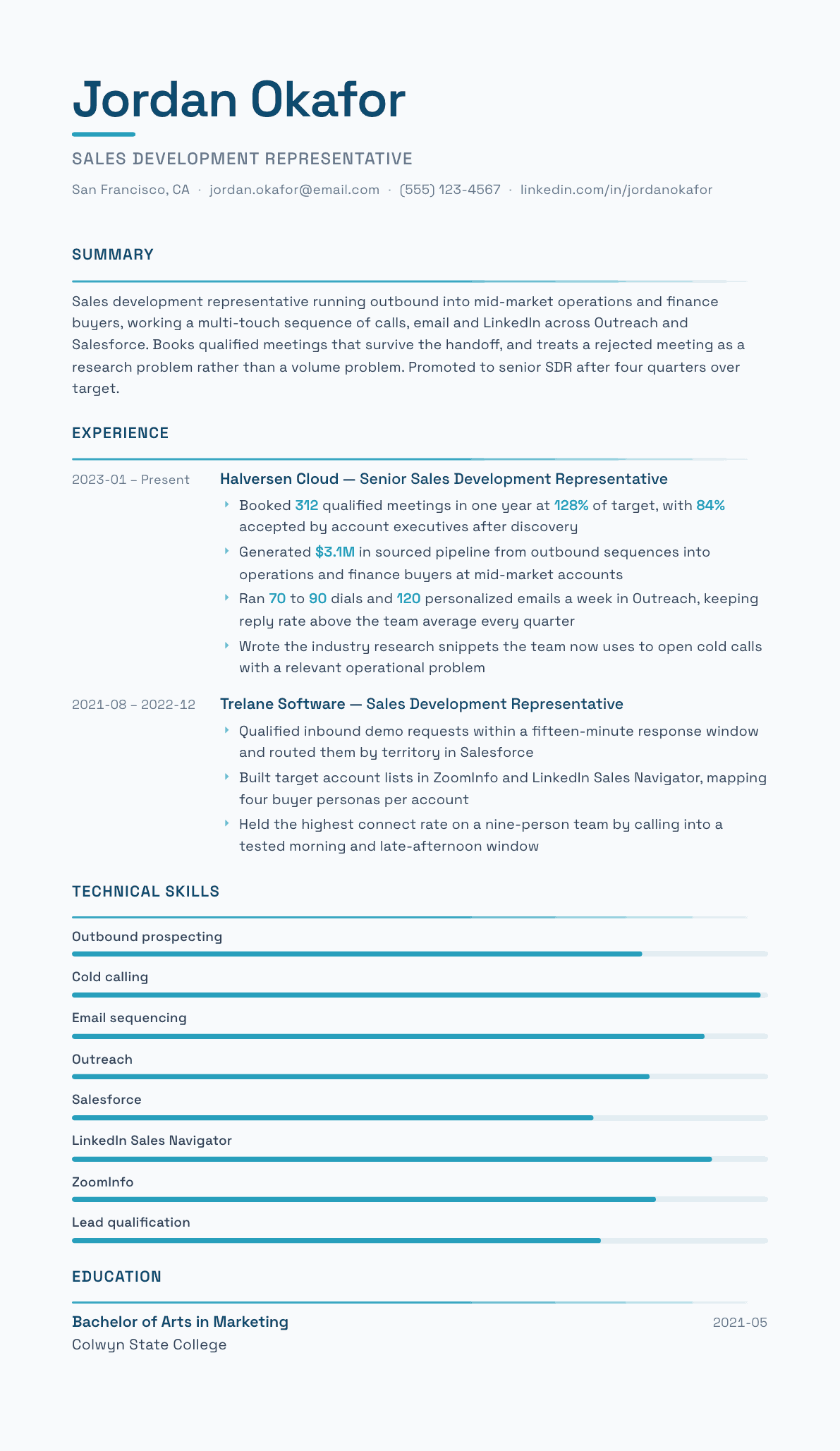
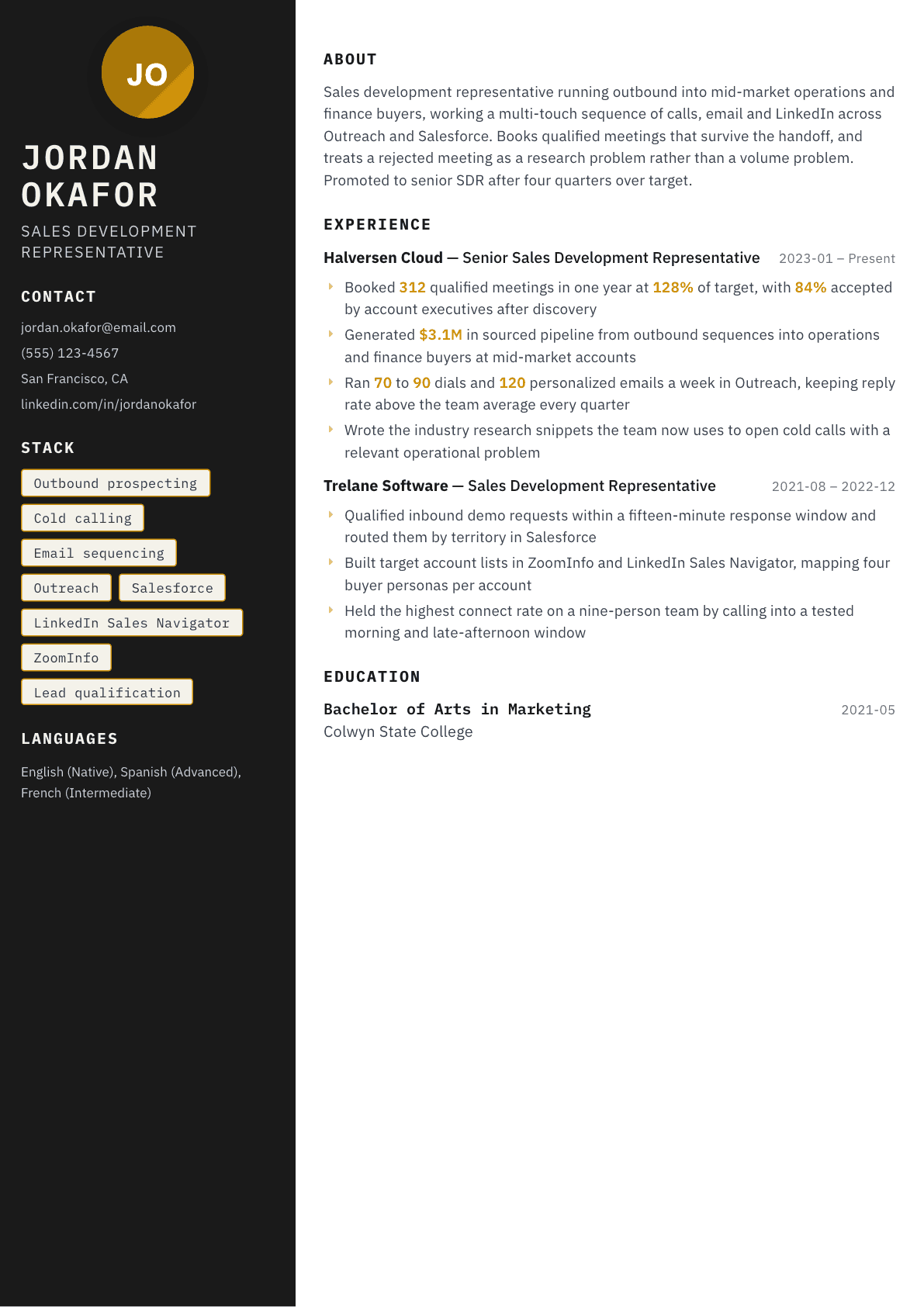
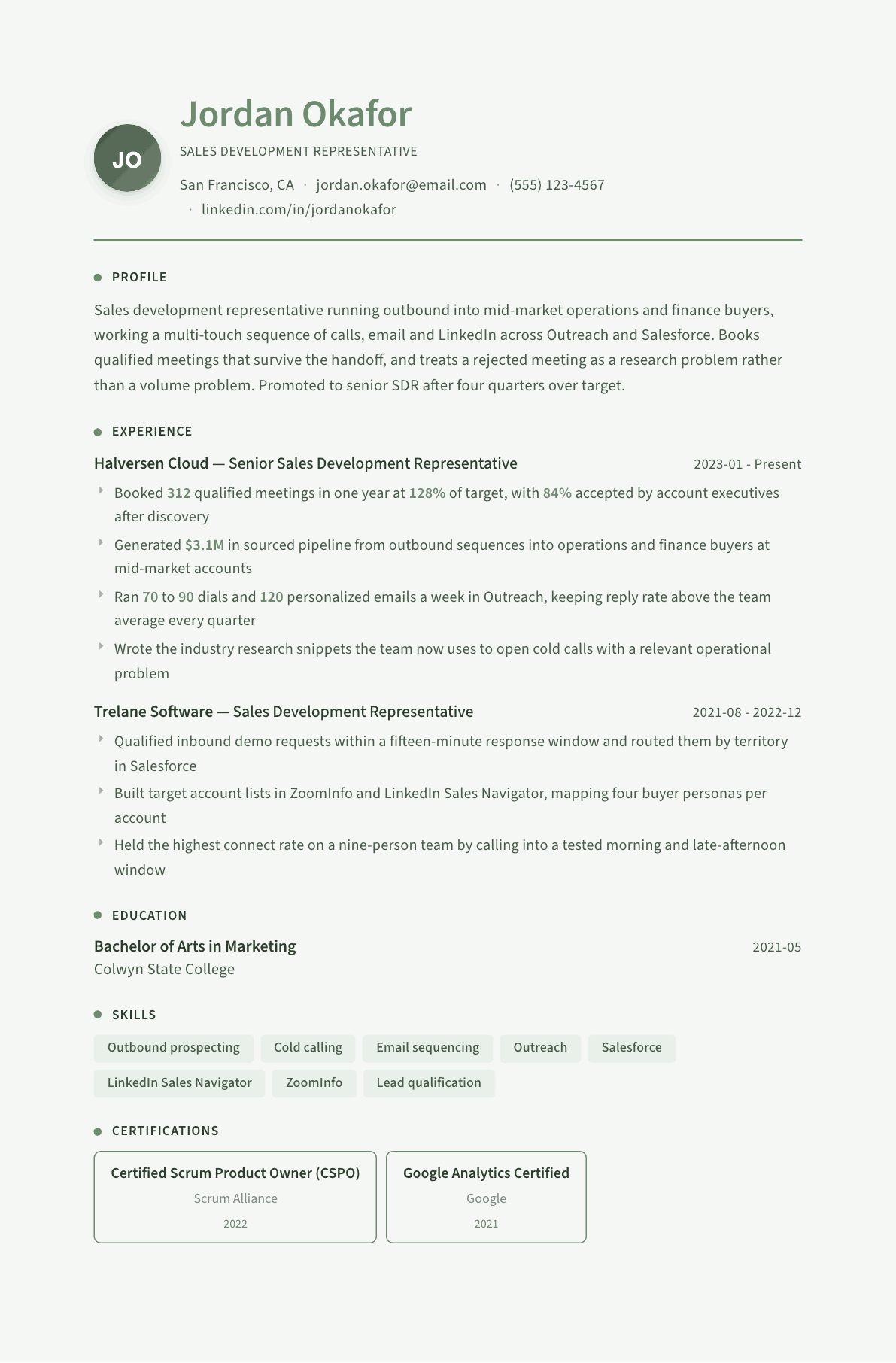
The same sales development representative content laid out in three CVBooster templates, so you can see what the finished document looks like before you write a word.
Example Sales Development Representative summary
Sales development representative with three years of outbound into mid-market operations and finance buyers, booking 312 qualified meetings in the last year at 128% of target with 84% accepted after discovery. Sourced $3.1M in pipeline through multi-touch sequences in Outreach and Salesforce. Promoted to senior SDR after four quarters over target and now writing the research snippets the team opens calls with.
Skills to list on a Sales Development Representative resume
- Outbound prospecting
- Cold calling
- Email sequencing and personalization
- LinkedIn social selling
- Lead qualification
- BANT and MEDDICC
- Outreach
- Salesloft
- Salesforce
- HubSpot CRM
- ZoomInfo
- LinkedIn Sales Navigator
- Account research and mapping
- Objection handling on cold calls
What actually gets this resume read
- Lead with meetings booked, meeting acceptance rate and sourced pipeline, the three numbers every SDR manager compares.
- Report acceptance or held rate alongside booked meetings, because a booked meeting nobody attends is not a result.
- Name the stack precisely: Outreach or Salesloft, Salesforce or HubSpot, ZoomInfo or Apollo, Gong for call review.
- Show your activity level per week so a manager can see the work rate behind the outcome, then show the conversion.
- Describe the segment and the buyer persona you prospected into, since enterprise and small business outbound are different jobs.
- Include the qualification framework used at handoff, whether BANT, MEDDICC or a company-specific meeting standard.
How to write a sales development representative resume
The person hiring a sales development representative usually runs a team of six to twenty and replaces several of them every year. She reads resumes against a very short scorecard: how many qualified meetings did this person book, did those meetings hold, how much pipeline did they turn into, and did they do it at a work rate she can recognize. Everything else on the page is context for those four facts.
The trap in this role is activity theater. Plenty of resumes report dials and emails as though effort were the product. A manager reads a high activity number with no conversion attached and concludes the candidate was busy rather than effective. The opposite error is just as common: a strong meeting count with no activity behind it looks like inherited inbound rather than earned outbound.
This guide covers the metric set that gets an SDR interviewed, how to describe outbound sequences and account research without sounding generic, how to handle the handoff to an account executive, and how to write the resume that gets you promoted into a closing role rather than moved sideways into another development team.
The four numbers that decide the screen
Meetings booked, meeting acceptance or held rate, sourced pipeline and attainment against target. Put all four in the first block of the resume, per year or per quarter. A manager can compare candidates on that row alone.
Acceptance rate is the one most candidates omit and the one that separates a booker from a qualifier. If four in five of your meetings are accepted by the account executive after discovery, that number is worth more than a larger booking count with no acceptance figure beside it.
Sourced pipeline is the number that translates your work into the language your manager reports upward. Give it as pipeline value or as opportunity count if the value is confidential.
- Meetings booked per month or per year against target.
- Acceptance or held rate after account executive discovery.
- Sourced pipeline value or opportunity count.
- Any closed revenue attributable to meetings you sourced.
Activity: show the work rate, then the conversion
Give the weekly rhythm you actually held: dials, connects, personalized emails, social touches, and the number of accounts you worked at once. Then give what it converted to. Activity plus conversion is a work ethic with evidence. Either one alone is a guess.
Say what personalized means in your case. A researched first line drawn from a recent operational change at the account is a different craft from a merge field with the company name in it, and managers can tell within one interview question which one you did.
Connect rate deserves a mention if you tested calling windows or used a dialer. It shows an SDR who treats the job as a system rather than a grind.
Segment, persona and the motion
Name the segment and the buyer. Prospecting into operations directors at mid-market shippers and prospecting into small business owners on a same-day close are different jobs, and a manager is pricing your ramp against her own motion.
Describe the account research method: how you built the target list, what data source you used, how many personas you mapped per account, and how you decided who to call first. That paragraph is where a thoughtful SDR separates from a volume SDR.
Inbound work counts, but label it as inbound. Qualifying demo requests inside a fifteen minute response window is a real skill with real numbers, and pretending it was outbound gets exposed immediately.
Handoff and qualification standard
State the qualification bar the meeting had to clear before it counted: BANT, MEDDICC, a company-specific meeting standard, or a written brief handed to the account executive. Managers care because an SDR who books unqualified meetings burns the relationship with the closing team.
Describe the handoff artifact. A written summary of the problem, the current tooling, the timeline and who else is involved makes the account executive fifteen minutes better prepared, and it is a concrete thing to talk about in an interview.
The stack, and how to name it
Sequencing tool: Outreach or Salesloft. Customer system: Salesforce or HubSpot. Data: ZoomInfo, Apollo, Cognism or LinkedIn Sales Navigator. Call review: Gong or Chorus. Dialer, if you used one. Recruiters filter directly on those product names.
Add what you built inside them rather than only that you used them. A sequence you wrote that the team adopted, a saved list logic, a research snippet library. Contribution to the team playbook is the strongest promotion signal an SDR can put on a resume.
Sales Development Representative resume summary examples
First SDR role
Marketing graduate six months into a first development role, booking 18 to 22 qualified meetings a month against a target of 18 and holding the highest connect rate on a nine-person team by testing morning and late afternoon calling windows. Working inbound demo requests and outbound lists in Salesforce.
Two years, outbound mid-market
Sales development representative prospecting operations and finance buyers at mid-market accounts. Booked 312 qualified meetings in the last year at 128% of target, with 84% accepted after discovery, and sourced pipeline through multi-touch sequences run in Outreach and tracked in Salesforce.
Senior SDR and team resource
Senior development representative over target for four consecutive quarters, now writing the research snippets and objection responses the team opens cold calls with. Mentors two newer representatives on account mapping and call structure, and is looking for a first closing role in the same segment.
Work experience bullets: before and after
Before: Booked meetings for account executives.
After: Booked 312 qualified meetings in one year at 128% of target, with 84% accepted by account executives after discovery rather than returned as poor fit.
The acceptance rate proves the meetings were qualified, which is the difference between a booker and a developer.
Before: Made a high volume of calls and emails every day.
After: Ran 70 to 90 dials and around 120 personalized emails a week in Outreach across a working set of 150 accounts, keeping reply rate above the team average every quarter.
Activity is paired with a conversion measure, so the work rate reads as effective rather than merely busy.
Before: Researched target accounts before reaching out.
After: Built target lists in ZoomInfo and Sales Navigator, mapped four buyer personas per account, and opened calls with a recent operational change at that specific business rather than a product pitch.
Naming the sources, the mapping depth and the opening approach shows research as a method others could copy.
Before: Qualified inbound leads that came from marketing.
After: Qualified inbound demo requests inside a fifteen minute response window and routed them by territory in Salesforce with a written problem summary attached for the account executive.
The response standard and the handoff artifact turn lead triage into a defined service level.
Before: Helped improve the team cold calling script.
After: Wrote the industry research snippets the team now uses to open cold calls, after testing three opening structures across a quarter and keeping the one with the best connect to conversation rate.
The test, the sample period and the adoption by others show contribution beyond your own quota.
Hard skills
- Outbound prospecting sequences
- Cold calling and voicemail structure
- Email personalization at volume
- Account and persona mapping
- Lead qualification with BANT or MEDDICC
- Outreach
- Salesloft
- Salesforce
- HubSpot CRM
- ZoomInfo and Apollo
- LinkedIn Sales Navigator
- Objection handling on cold calls
Soft skills
- Tolerance for rejection
- Daily consistency
- Curiosity about a stranger business
- Coachability in call reviews
- Time blocking discipline
- Clear written handoffs
Certifications worth listing
- Salesforce Certified Associate (Salesforce)
- HubSpot Sales Software Certification (HubSpot Academy)
- Certified Professional Sales Person (CPSP) (National Association of Sales Professionals)
Mistakes that cost sales development representative candidates the interview
- Reporting dials and emails with no meeting or pipeline conversion attached to them.
- Omitting the acceptance rate, which is the only proof that the meetings you booked were qualified.
- Presenting inbound qualification work as though it had been outbound prospecting.
- Describing outreach as personalized without saying what the personalization was drawn from.
- Leaving the segment and buyer persona unnamed, so a manager cannot judge the ramp.
- Listing tools without any mention of a sequence, list or snippet you built that others reused.
- Writing a full page about a six-month role while leaving the target and attainment off it.
Sales Development Representative resume questions
What metrics should an SDR resume include?
Meetings booked against target, acceptance or held rate after discovery, sourced pipeline and any closed revenue traceable to your meetings. Add activity volume and reply or connect rate underneath so the manager can see the work rate behind the outcome.
How do I write an SDR resume with no sales experience?
Use any work involving rejection, targets or persuasion: hospitality, fundraising, recruitment, retail, competitive sport, campus roles. Show volume, consistency and coachability, then name the tools you have taught yourself and any sales course you completed.
How long should a sales development representative resume be?
One page. SDR careers are short by design and managers screen quickly. Use the space for the metric block, two roles with real numbers, the tool stack, and one line on what you contributed to the team playbook.
How do I get promoted from SDR to account executive?
Show the closing-adjacent work on the page: discovery calls you ran alone, deals you supported through to signature, objection handling you documented, and mentoring of newer representatives. Then state plainly in the summary that you are targeting a closing role.
Should I list the companies I prospected into?
Describe the account type, size and industry rather than naming individual prospects. Naming target accounts can breach confidentiality and rarely helps, while the segment description tells a hiring manager everything she needs about whether the motion transfers.