Tailor Resume Examples: what a hiring manager reads first
Write a Tailor Resume That Shows Real Bench Skill
By Mustafa Tarabya, founder of CVBooster · Published · Updated
Tailor resume examples covering alterations, bespoke construction, machine skills and fittings, with sample bullets and a full writing guide.
Sample resumes for a tailor
The same tailor content laid out in three CVBooster templates, so you can see what the finished document looks like before you write a word.
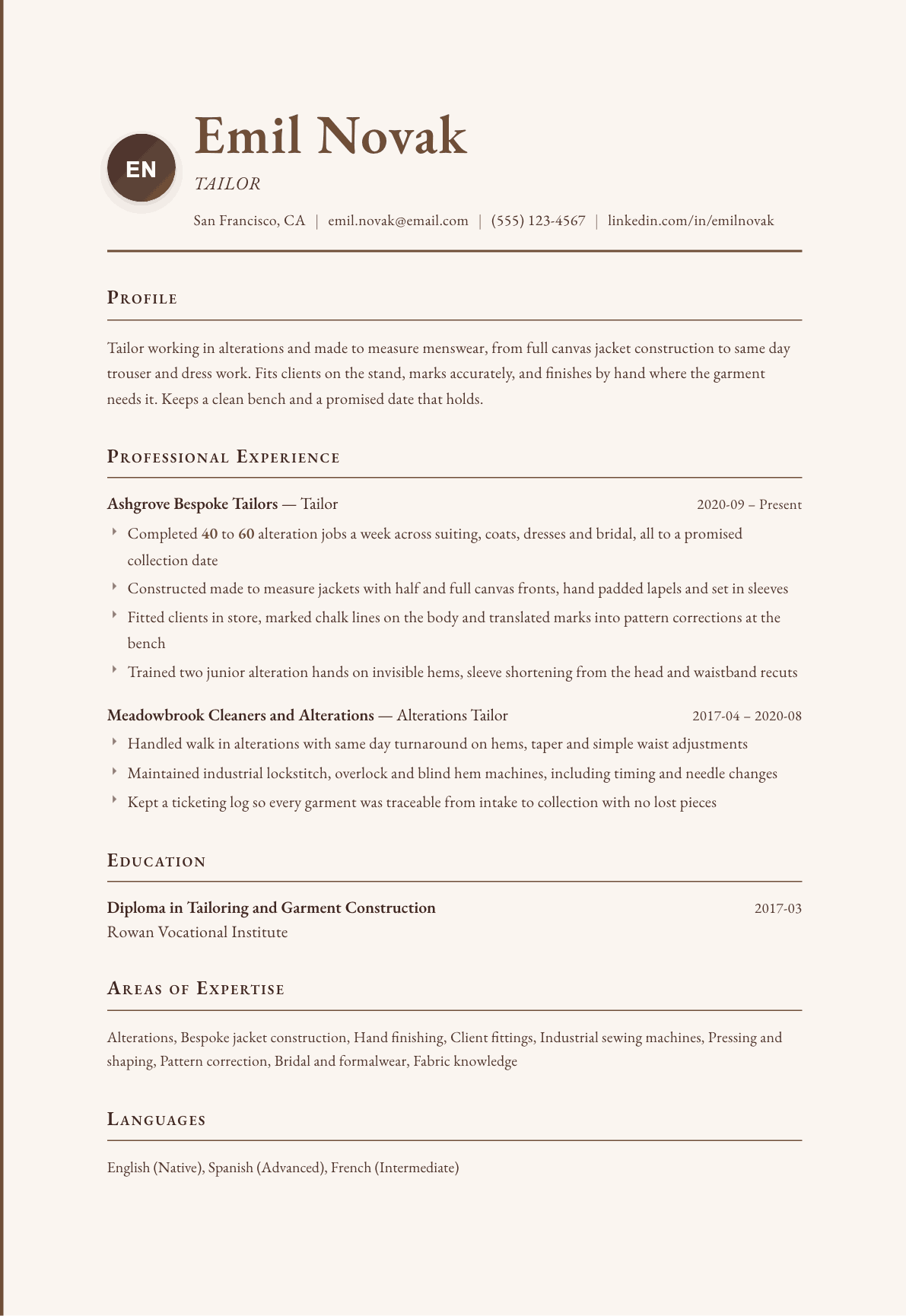
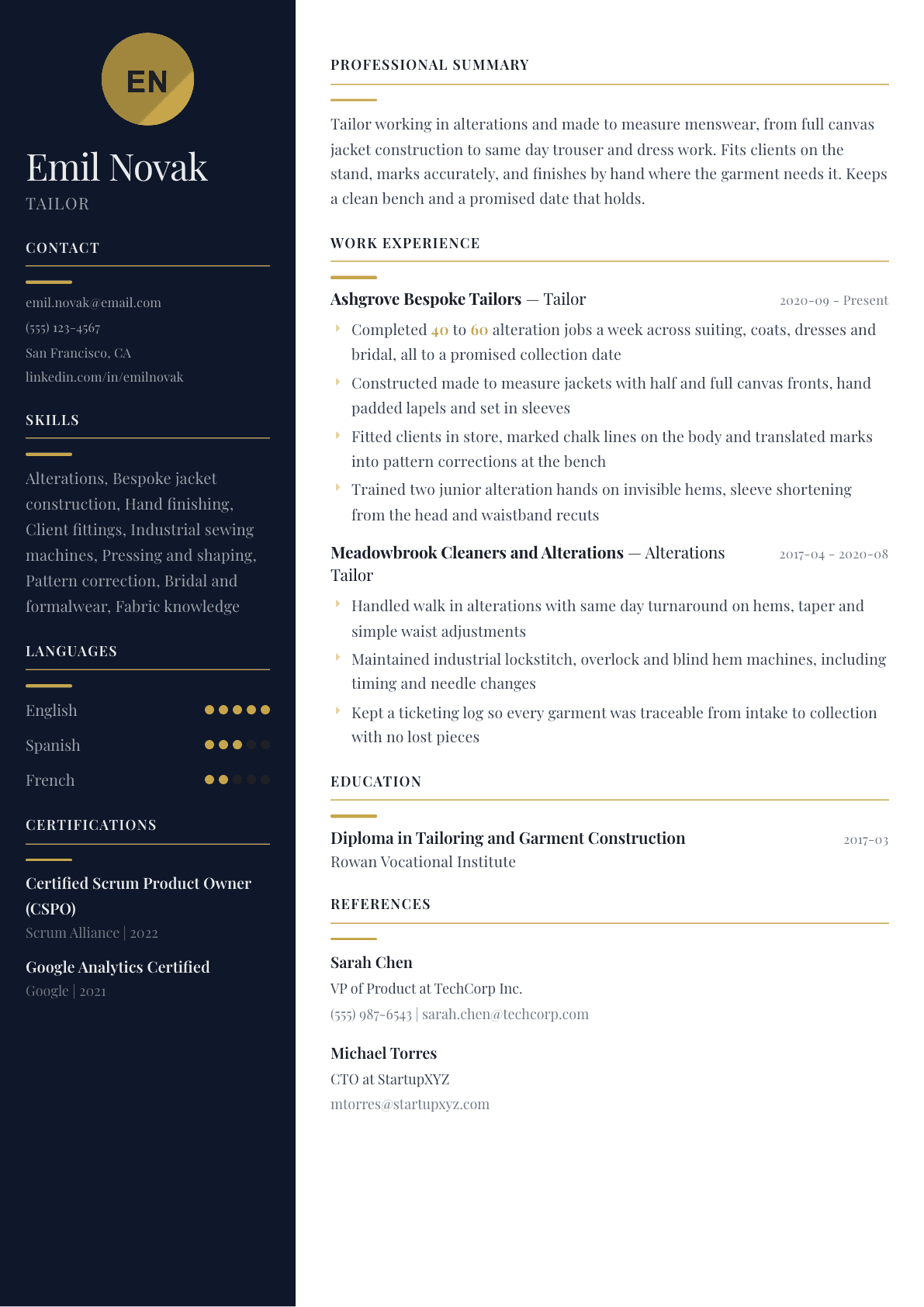
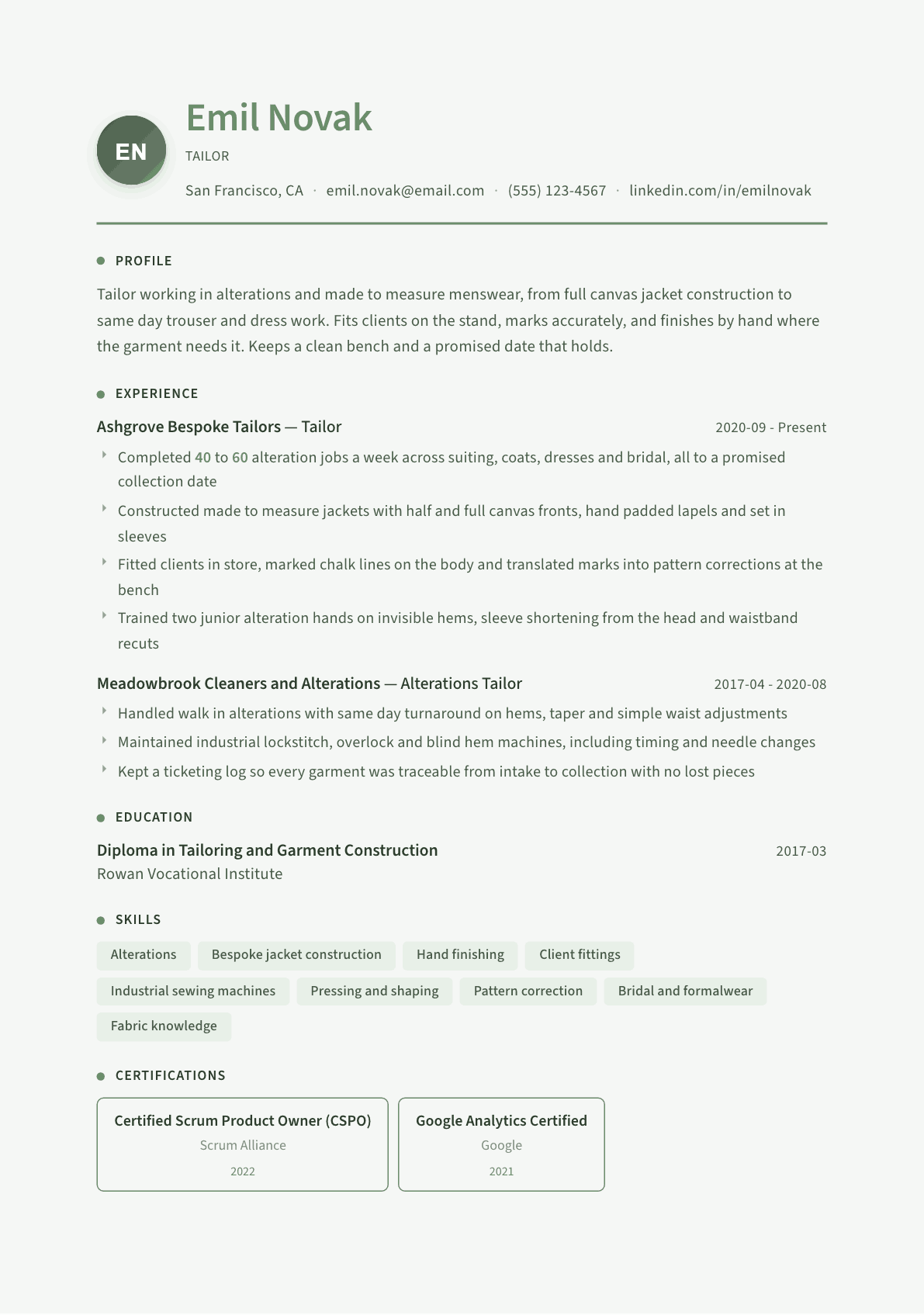
Example Tailor summary
Tailor with eight years across alterations and made to measure menswear. Constructs canvassed jackets, recuts trousers and handles bridal and formalwear to a promised date. Fits clients on the floor, marks on the body and carries the correction back into the pattern. Maintains industrial machines and keeps a traceable ticket log so nothing is misplaced between intake and collection.
Skills to list on a Tailor resume
- Garment alterations
- Made to measure construction
- Full and half canvas jackets
- Hand pad stitching
- Invisible and blind hemming
- Sleeve shortening from the head
- Trouser and waistband recuts
- Client fitting and chalk marking
- Pattern correction
- Industrial lockstitch and overlock
- Buttonhole and bar tack machines
- Pressing and shaping
- Bridal and formalwear alterations
- Fabric and interlining knowledge
What actually gets this resume read
- Split alterations from bespoke or made to measure construction, because those are two different hiring decisions.
- Give weekly job volume and turnaround times, which is how an alterations manager measures a bench tailor.
- List the machines you run and maintain, including overlock, blind hem, buttonhole and any specialist irons.
- Say which garment types you handle: suiting, coats, bridal, leather, knit, because ranges differ by shop.
- Mention client fitting and chalk marking if you do it, since customer facing tailors command different pay.
- Note any hand work you can do, such as pad stitching, invisible hems, hand set sleeves or buttonholes.
How to write a tailor resume
A tailor resume is a bench skills document. The person hiring runs an alterations room, a bespoke workshop or a bridal salon, and they are trying to establish two things quickly: which operations you can perform without supervision, and how many jobs a week you can turn to a promised date. Everything else on the page is secondary to those two facts.
The most common failure is treating alterations and made to measure construction as one thing. They are two different hiring decisions. An alterations manager wants speed, machine range and reliability on hems, tapers and waistbands. A bespoke workshop wants canvas construction, hand pad stitching and the patience to sit with a coat for days. A resume that blurs them reads as unqualified for both.
This guide covers how to separate those tracks, how to write bullets that a head tailor can verify with one bench test, what to say about machines, fittings and garment types, and the questions tailors ask when moving between a dry cleaning shop, a retail alterations department and a bespoke house.
Format: one page, operations listed plainly
One page, reverse chronological, no design flourishes. Under the header put a short operations block: the alterations you perform, the construction you can build, the machines you run, and the garment types you handle. A head tailor reads that block and forms an opinion before reaching your first employer.
Give every job a scope line: the shop type, the volume, and the turnaround promised to customers. A same day walk in shop and a bespoke house working to a six week schedule are different worlds, and the reader needs to know which pace you are used to.
- Header: name, city, phone, email, and languages spoken if you serve customers directly.
- Operations block: alterations performed, construction built, machines run, garment types handled.
- Sections in this order: summary, operations, experience, training and apprenticeship.
Summary: track, volume, and what you finish by hand
Say whether you are an alterations tailor, a bespoke or made to measure tailor, or both, then the years, the weekly volume, and one hand skill that proves depth. Pad stitched lapels, hand set sleeves, invisible hems or hand worked buttonholes each tell a reader something a machine list cannot.
Add the customer facing part if you do it. Tailors who fit clients on the floor, mark chalk lines on the body and translate those marks into a correction at the bench are paid differently from tailors who only receive ticketed garments, because the shop can put them in front of a customer.
Experience: the operations, the volume, the promised date
Lead with volume and range. Forty to sixty alteration jobs a week across suiting, coats, dresses and bridal, all to a promised collection date, tells an alterations manager exactly what you can absorb. Follow it with the harder operations, because that is where skill is proved: sleeve shortening from the head, waistband recuts, taking in a jacket at the back seam and side body, rebuilding a bridal bodice.
For bespoke and made to measure, describe the construction. Half and full canvas fronts, hand padded lapels, set in sleeves, pockets and linings, and how many garments you carry through from cutting to final press. Say whether you work from your own pattern, a house block or a measured order sent to a workroom.
Reliability is a skill in this trade and deserves a bullet. A ticket log where every garment is traceable from intake to collection, a record of promised dates held through the wedding season, or a remake rate you drove down all address the risk the shop owner actually carries.
Machines and equipment: list what you run and maintain
Name the machines: industrial lockstitch, overlock, blind hem, buttonhole, bar tack, blindstitch felling, and the presses and irons you use for shaping. Then say whether you maintain them. A tailor who changes needles, sets timing, adjusts tension and clears a jam without calling a technician keeps a bench running on a Saturday.
Pressing deserves its own mention. Shaping a shoulder or a chest with iron and ham is a skill customers see in the finished garment even when they cannot name it, and hiring tailors know that pressing separates a good alteration from a flat one.
Fabrics, fittings and customer work
List the fabrics and garment types that carry risk: bridal with beading and lace, leather and suede, knitwear, pleated and lined wool, technical outerwear. A shop hiring for a bridal season is screening for exactly those words and will otherwise assume you have not handled them.
If you have trained others, say how many and on what operations. Training junior hands on invisible hems, sleeve shortening from the head and waistband recuts is the line that moves a resume from bench tailor toward head of alterations.
Tailor resume summary examples
Alterations hand
Alterations tailor with two years in a walk in shop handling hems, tapers and simple waist adjustments to same day turnaround. Runs and maintains industrial lockstitch, overlock and blind hem machines, and keeps a ticket log so every garment is traceable from intake to collection.
Bench tailor
Tailor with six years across alterations and made to measure menswear, completing 40 to 60 jobs a week on suiting, coats, dresses and bridal. Builds half and full canvas jacket fronts with hand padded lapels, fits clients on the floor and carries chalk marks back into pattern corrections.
Head tailor
Head tailor with fourteen years in bespoke and alterations, running a three person bench through peak bridal and formal seasons. Constructs full canvas coats from cutting to final press, sets promised dates that hold, and has trained four junior hands on hand finishing and recuts.
Work experience bullets: before and after
Before: Performed clothing alterations for customers.
After: Completed 40 to 60 alteration jobs a week across suiting, coats, dresses and bridal, every one delivered on the promised collection date.
Weekly volume, garment range and an on time record are the three things an alterations manager measures a bench on.
Before: Made suits and jackets.
After: Constructed made to measure jackets with half and full canvas fronts, hand padded lapels and set in sleeves, carrying each garment from cutting through final press.
Naming the construction and the span of ownership proves bespoke skill that the word made never establishes.
Before: Met with customers about their fittings.
After: Fitted clients in store, marked chalk lines on the body, and translated those marks into pattern corrections at the bench without a second fitting on routine work.
The fitting to bench chain, and avoiding a second appointment, shows the commercial value of a customer facing tailor.
Before: Used industrial sewing machines.
After: Ran and maintained industrial lockstitch, overlock and blind hem machines, including timing, tension and needle changes, so the bench kept working through weekend peaks.
Maintenance is the difference between operating a machine and keeping a shop open, and the bullet now says so.
Before: Trained new staff.
After: Trained two junior alteration hands on invisible hems, sleeve shortening from the head and waistband recuts until each worked those operations unsupervised.
The operations taught and the standard reached make the training claim concrete and checkable.
Hard skills
- Garment alterations
- Made to measure construction
- Full and half canvas jackets
- Hand pad stitching
- Invisible and blind hemming
- Sleeve shortening from the head
- Trouser taper and waistband recuts
- Client fitting and chalk marking
- Pattern correction
- Industrial lockstitch and overlock
- Buttonhole and bar tack machines
- Pressing and shaping
- Bridal and formalwear alterations
- Fabric and interlining knowledge
Soft skills
- Customer consultation
- Working to a promised date
- Steady hand and patience
- Honest estimating
- Training junior hands
- Calm through peak season
Mistakes that cost tailor candidates the interview
- Merging alterations and bespoke work into one description, which reads as underqualified to both kinds of employer.
- Leaving out weekly job volume and turnaround, the two numbers an alterations manager uses to size a bench.
- Listing sewing as a skill without naming the machines you run and whether you maintain them.
- Omitting bridal, leather or knitwear experience when a shop is hiring specifically for a season that demands it.
- Never mentioning fittings or chalk marking, which keeps you off the floor and out of the better paid work.
- Describing yourself as detail oriented instead of naming the hand operations that prove it.
Tailor resume questions
Does a tailor need a formal qualification to be hired?
Most shops hire on a bench test rather than a certificate, so the resume exists to earn the test. Vocational training or an apprenticeship is worth listing with the operations covered, but volume, machine range and hand skills carry the decision.
How do I show bespoke skill without photographs on a resume?
Name the construction operations precisely: full canvas fronts, hand padded lapels, set in sleeves, hand felled linings, worked buttonholes. Anyone who builds coats knows immediately which of those you can actually do, and they will confirm it at the bench.
Should I list the number of alterations I do per week?
Yes, with the garment mix and the turnaround attached, because an alterations manager staffs by throughput. Give an honest range rather than a peak figure, since the number will be checked against your first weeks on the bench.
How do I write a tailor resume for a bridal salon?
Lead with bridal and formalwear: bodice recuts, bustles, beading and lace handling, hems on multiple layers, and fittings close to a wedding date. Emphasize the promised date record, because a late bridal alteration is the failure that salon fears most.
What do retail alterations departments want that bespoke houses do not?
Speed, consistency across a high ticket volume, comfort serving customers on the sales floor, and a traceable intake and collection system. Bespoke houses trade that volume for construction depth and patience with a single garment over many days.