Acquisitions Analyst Resume Examples: what gets the call
Write an Acquisitions Analyst Resume That Gets to the Deal Team
By Mustafa Tarabya, founder of CVBooster · Published · Updated
Acquisitions analyst resume example, keyword list and writing guide covering underwriting models, deal volume, due diligence and IC memos.
Sample resumes for a acquisitions analyst
The same acquisitions analyst content laid out in three CVBooster templates, so you can see what the finished document looks like before you write a word.
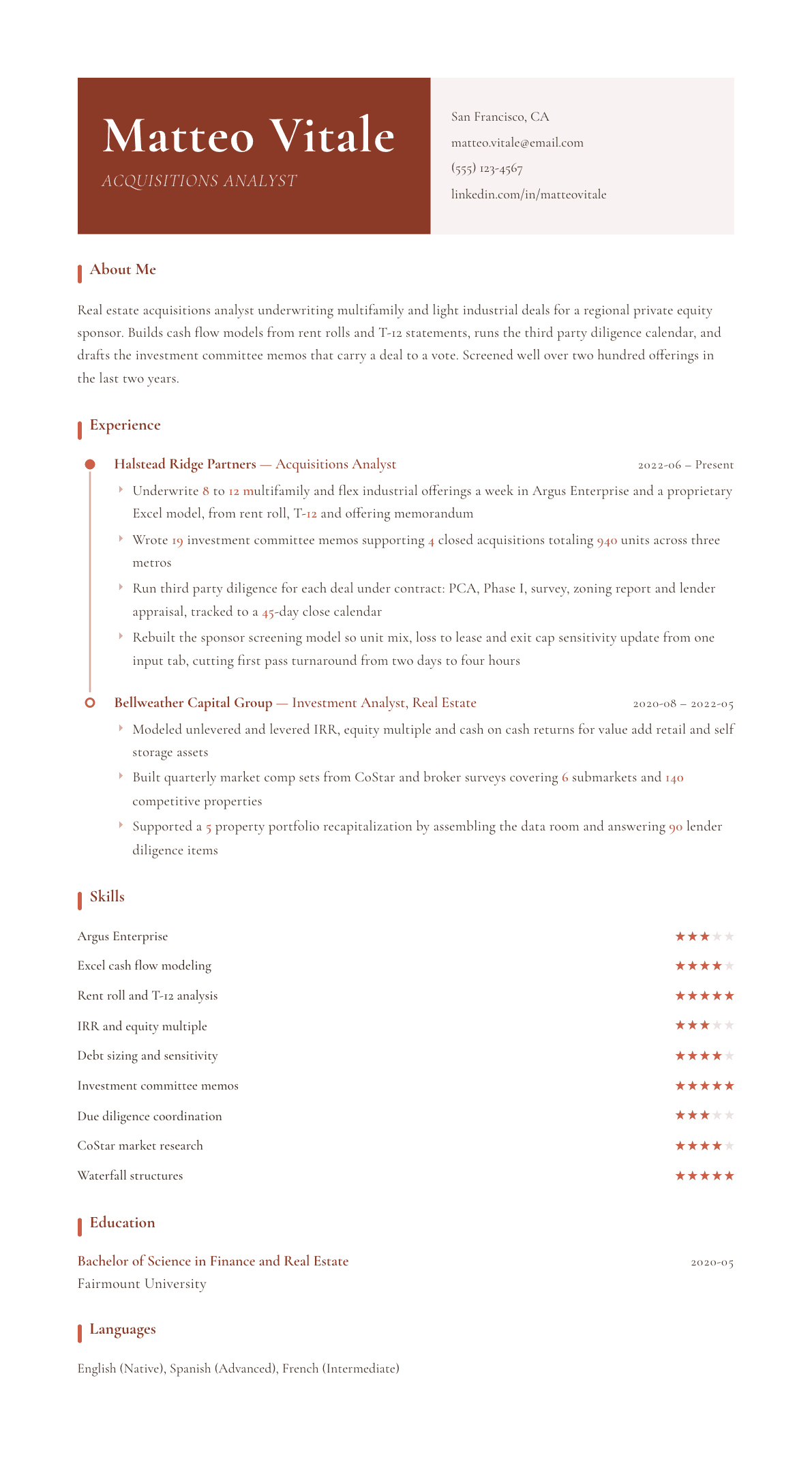
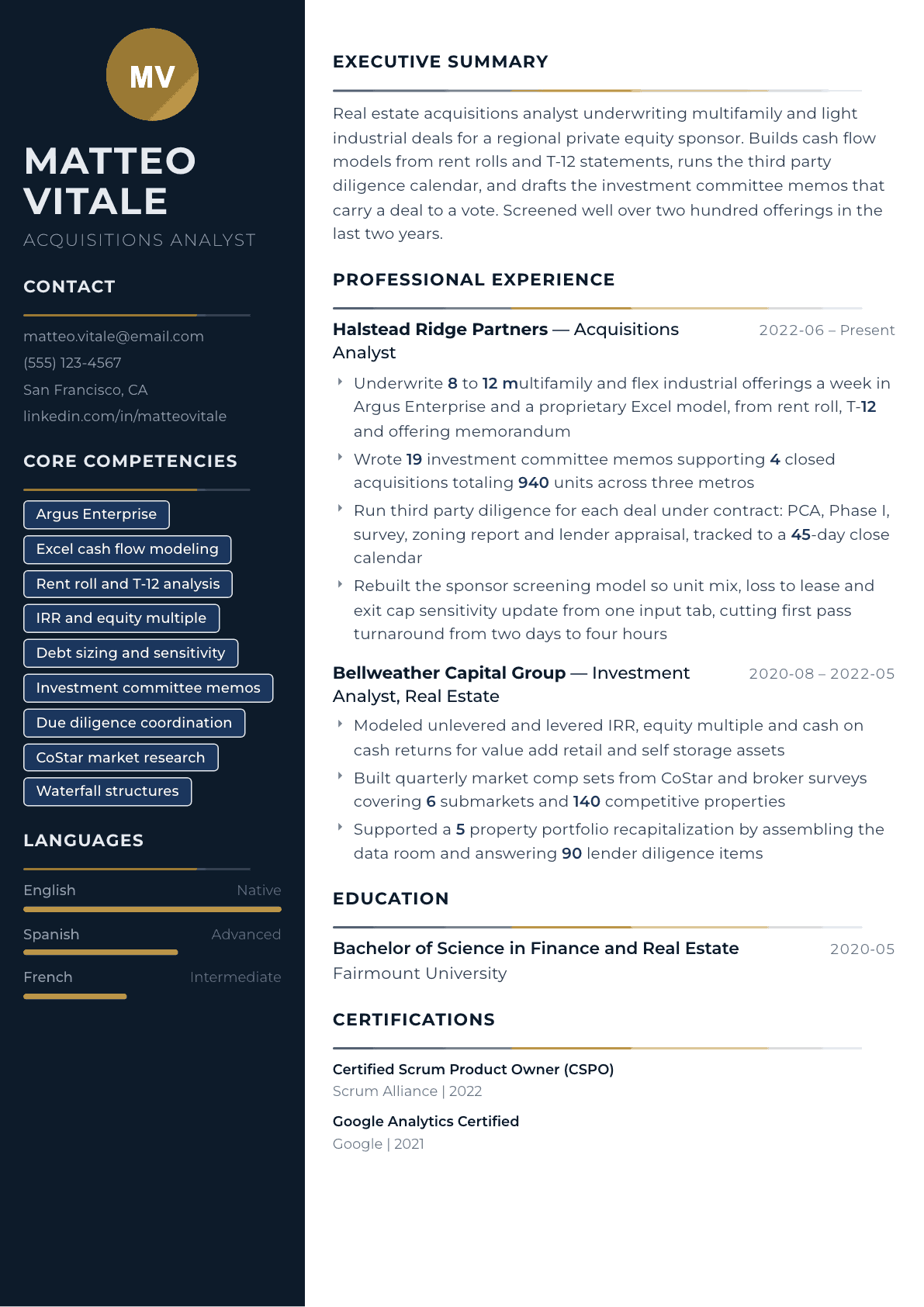
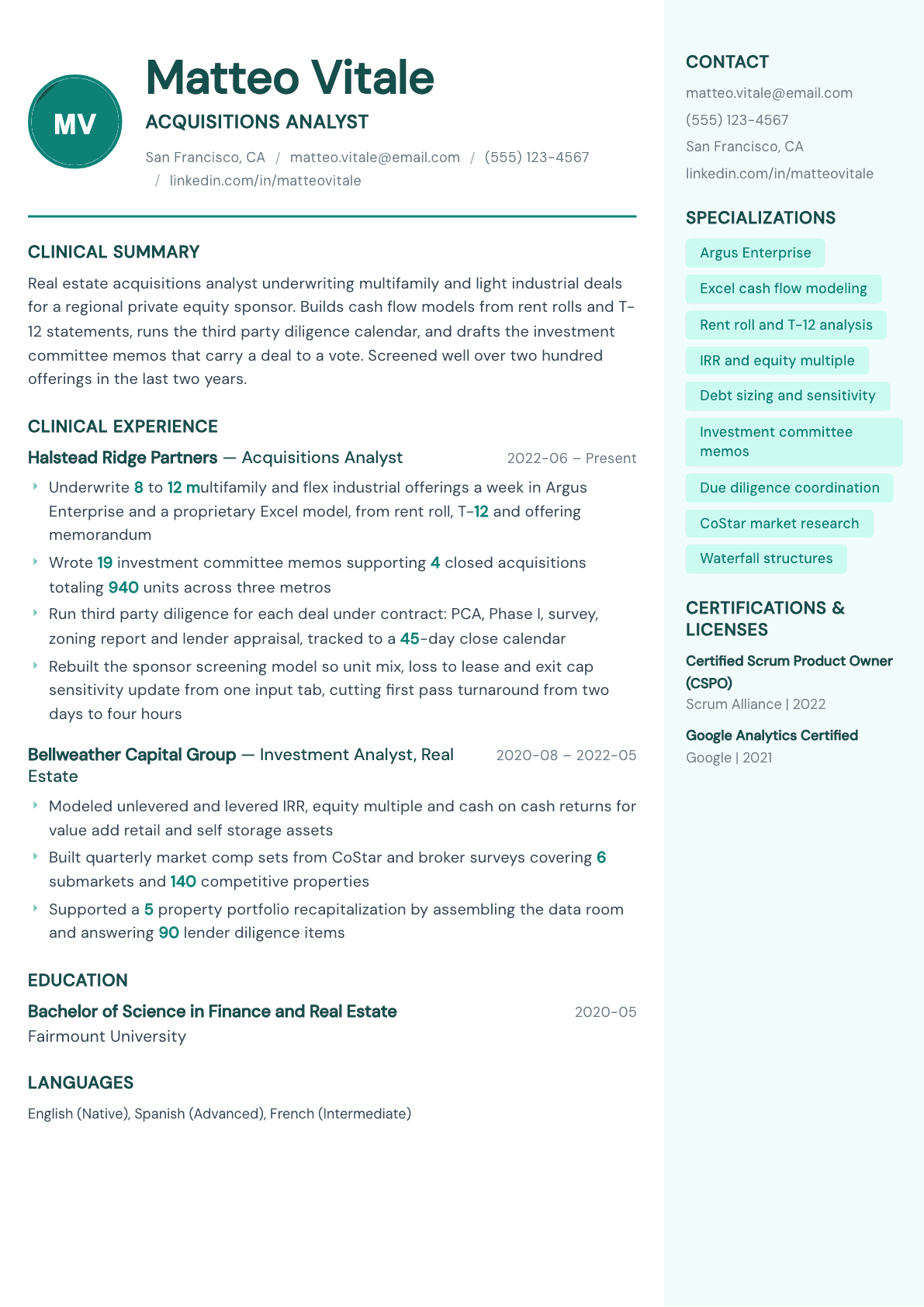
Example Acquisitions Analyst summary
Acquisitions analyst with three years underwriting multifamily and industrial offerings for a regional sponsor, screening roughly ten deals a week and supporting four closings across three metros. Fluent in Argus Enterprise and a rebuilt Excel model that prices unit mix, loss to lease and exit cap in one pass. Runs third party diligence to the close calendar and drafts the investment committee memo that carries the vote.
Skills to list on a Acquisitions Analyst resume
- Argus Enterprise underwriting
- Excel financial modeling
- Rent roll normalization
- T-12 expense analysis
- Discounted cash flow
- IRR and equity multiple analysis
- Debt sizing and DSCR testing
- Equity waterfall modeling
- Sensitivity and scenario analysis
- Investment committee memo writing
- Due diligence management
- Broker offering memorandum review
- CoStar and market comp research
- Lease abstraction
- Exit cap and residual analysis
What actually gets this resume read
- Give your annual screening volume and how many of those deals actually closed, because sponsors hire on throughput.
- Name the modeling stack you own outright: Argus Enterprise, Excel, and any proprietary sponsor model you rebuilt.
- State the property types and the markets you underwrite, since a multifamily shop will not read industrial work as transferable.
- Show the diligence you personally ran, from Phase I and PCA ordering to lender question lists, not just the model.
- Put deal size in units, square feet or keys rather than dollars, which keeps the resume readable across fund sizes.
- Mention the investment committee memos you drafted and how many of them went to a vote, because writing is half this job.
How to write a acquisitions analyst resume
An acquisitions analyst resume is judged by a deal team that lives inside a model. The vice president who screens it wants to know three things before the second paragraph: what property types you underwrite, how many offerings you push through a week, and whether anything you touched actually closed. Everything else on the page is supporting evidence.
The trap is writing the resume as a list of software. Argus Enterprise on a skills line proves nothing, because half the pile has it. What separates a real underwriter is the ability to normalize a messy rent roll, defend a loss to lease assumption, and explain why the exit cap in the memo is the one the committee should believe.
This guide covers the order a sponsor reads the page, how to size deals without publishing a fund model, three summaries for different stages of an analyst career, before and after bullets, and the questions candidates ask when they move between property types.
Format: one page, reverse chronological, no charts
Keep it to a single page until you have run a deal team. Acquisitions hiring happens in bursts around capital raises, and a vice president reads a stack of these between calls. A dense one page file with clean dates reads faster than a designed two page file with a skills chart.
Resist the visual template with rating bars for Excel and Argus. A modeling test will settle that question in ninety minutes, and the bars make the reader wonder what you are covering up.
- Header line: name, city, phone, email, and the property types you underwrite.
- Order the page summary, deal experience, transaction sheet or closed deals, education, technical skills.
- Analysts still in school move education up and add a modeling coursework or case competition line.
Summary: property type, market, weekly screening volume
Three lines that a sponsor could read aloud in an intro call. Name the asset classes you underwrite, the markets, the roughly weekly volume of offerings you take from broker package to first pass, and how many of those went to committee or closed.
If you are crossing property types, say so directly. An analyst moving from retail to multifamily should name the transferable machinery, meaning rent roll normalization, expense reforecasting and debt sizing, rather than hoping the reader connects a strip center to a garden apartment.
Experience: volume in, memos out, deals closed
Each role opens with what the platform is: a private equity sponsor, a developer, a family office, a brokerage capital markets desk. Then the strategy, meaning core plus, value add, opportunistic or ground up, because underwriting a stabilized asset and underwriting a lease up are different jobs with different arguments.
Then three to five bullets. Volume first, so a reader knows the pace you keep. Then the model work in specific terms: unlevered and levered returns, equity multiple, debt sizing against a debt service coverage test, promote waterfalls, sensitivity tables that move exit cap and rent growth together. Then the deals that closed, sized in units, square feet or keys.
Include the diligence you personally ran. Ordering a property condition assessment, tracking a Phase I to a clean letter, reconciling a survey against title exceptions, and answering a lender question list are what an analyst actually does between contract and close, and many resumes leave all of it out.
The closed deal list: the section that gets you the interview
A short transaction sheet at the bottom is the strongest thing on an acquisitions resume. Give each deal a line: property type, unit or square footage count, market, your role on the deal, and the outcome. Do not publish confidential pricing. Sizing in units and square feet says enough, and a sponsor will ask for the rest in the room.
Mark clearly whether you underwrote it, supported it, or led it. An analyst who overstates ownership of a closing is caught in the first technical interview, because the follow up question is always about the assumption someone argued over.
Technical skills: the model, the data, the market sources
Split the skills line into modeling, data and research. Modeling covers Argus Enterprise, Excel with the specific work you can build from a blank sheet, and any proprietary sponsor model you rebuilt or maintained. Data covers Yardi, MRI or the rent roll exports you clean. Research covers CoStar, REIS style market data, broker surveys and county records.
Say what you can build unaided. A line that reads build a levered cash flow with a construction draw schedule, an interest reserve and a three tier promote carries more weight than a list of five program names.
Keywords a sponsor and its applicant tracking system scan for
Acquisitions postings recycle the same vocabulary: underwriting, offering memorandum, rent roll, trailing twelve, discounted cash flow, internal rate of return, equity multiple, cash on cash, debt sizing, capitalization rate, waterfall, investment committee, due diligence and market comparables. Use the exact phrases once in the summary and again inside a bullet where they describe real work.
Add the property type words the fund cares about, because a self storage sponsor and a life science developer filter on different nouns even though the model looks similar.
Acquisitions Analyst resume summary examples
First analyst seat
Finance graduate with a real estate concentration and a summer on a capital markets desk, abstracting 45 leases and building comparable sets for four offering memoranda. Can build a levered multifamily cash flow with a promote waterfall from a blank workbook. Seeking a multifamily acquisitions analyst seat.
Three years underwriting
Acquisitions analyst screening 8 to 12 multifamily and light industrial offerings a week for a regional sponsor. Wrote 19 investment committee memos behind four closings totaling 940 units, and rebuilt the screening model so exit cap and loss to lease sensitivity update from a single input tab.
Senior analyst moving to associate
Senior acquisitions analyst covering three Sun Belt metros, leading first pass underwriting and running third party diligence on every deal under contract. Supported 11 closings across 2,100 units and one industrial portfolio, and now trains two analysts on the sponsor model and memo standard.
Work experience bullets: before and after
Before: Underwrote real estate acquisitions using Argus and Excel.
After: Underwrote 8 to 12 multifamily and flex industrial offerings a week in Argus Enterprise and a proprietary Excel model, working from rent roll, trailing twelve statements and the broker package.
Weekly volume, property type and the actual source documents show the pace and depth the model line alone hides.
Before: Assisted with investment committee presentations.
After: Drafted 19 investment committee memos covering market thesis, rent comparables, capital plan and downside case, four of which supported closed acquisitions across three metros.
Naming the memo sections and the closings proves you wrote the argument rather than formatting someone else's slides.
Before: Handled due diligence for deals under contract.
After: Ran third party diligence on every deal under contract, ordering the property condition assessment, Phase I, survey and zoning report against a 45 day close calendar and clearing lender questions before rate lock.
The specific reports and the calendar show you can carry a deal from contract to close, not just build the model.
Before: Improved the underwriting model.
After: Rebuilt the screening model so unit mix, loss to lease and exit cap sensitivity update from one input tab, cutting first pass turnaround from two days to four hours.
The reader learns what changed inside the workbook and what it bought the deal team in time.
Before: Researched market conditions and comparable properties.
After: Built quarterly comparable sets across 6 submarkets and 140 competitive properties from CoStar, broker surveys and site visits, and defended the rent growth assumption used in every memo that quarter.
Coverage and the fact that you owned the assumption turn generic research into an underwriting responsibility.
Hard skills
- Argus Enterprise
- Excel cash flow modeling
- Rent roll normalization
- Trailing twelve expense analysis
- Discounted cash flow analysis
- Levered and unlevered return analysis
- Debt sizing and coverage testing
- Equity waterfall and promote structures
- Sensitivity and scenario tables
- Lease abstraction
- Investment committee memo writing
- Third party diligence coordination
- CoStar and market comparables
- Capitalization rate and residual analysis
Soft skills
- Assumption defense
- Written argument
- Broker relationship management
- Deadline discipline under a close calendar
- Attention to source documents
- Working across the deal team
Certifications worth listing
- Argus Enterprise Certification (Altus Group)
- Chartered Financial Analyst (CFA) (CFA Institute)
- Certified Commercial Investment Member (CCIM) (CCIM Institute)
Mistakes that cost acquisitions analyst candidates the interview
- Listing modeling software without saying what you can build from a blank workbook, which every technical interview tests anyway.
- Publishing purchase prices or fund returns on a resume, when unit and square footage counts say enough without a confidentiality problem.
- Claiming a closing you only screened, because the first follow up question is about the assumption the committee argued over.
- Leaving out due diligence work, which makes an analyst look like a spreadsheet operator rather than someone who can close.
- Describing generic finance duties that could belong to a corporate analyst, with no rent roll, lease or capitalization rate anywhere on the page.
- Writing two pages before you have led a deal, which reads as padding to a reader used to one page analyst files.
Acquisitions Analyst resume questions
Should I include a deal sheet on an acquisitions analyst resume?
Yes, and keep it to the bottom third of the page. One line per deal with property type, unit or square footage count, market, your role and the outcome. Leave pricing off unless a former employer has published it, because confidentiality problems end candidacies.
How do I show underwriting volume without exaggerating?
Give a weekly or annual range for offerings screened, then a smaller number for deals taken to a full underwriting, then a smaller number still for closings. The funnel is credible because it matches how a real pipeline behaves and invites a natural interview conversation.
Can I move from brokerage to the buy side with this resume?
Yes if you lead with the modeling and diligence rather than the marketing work. Emphasize lease abstraction, cash flow builds, comparable analysis and offering memorandum content you produced, and cut the pitch deck design and tour logistics down to a single line.
Do I need Argus if the sponsor underwrites in Excel?
Not always, but say which one you own. Many multifamily shops run pure Excel while office, retail and industrial teams expect Argus for lease level cash flow. Naming the environment you worked in tells the reader whether you need a ramp before the first live deal.
What certifications actually help an acquisitions analyst?
An Argus Enterprise certification is the cheapest credible signal for lease driven property types. Progress toward the Chartered Financial Analyst designation reads well at institutional platforms, and the Certified Commercial Investment Member designation is respected on the brokerage and private sponsor side.
Related resume examples
- Real Estate Analyst Resume example
- Investment Analyst Resume example
- Asset Manager Real Estate Resume example
- Financial Analyst Resume example
- Real Estate Investor Resume example
- Commercial Real Estate Agent Resume example