Auto Detailer Resume Examples: free ATS score and gap list
Write an Auto Detailer Resume That Shows Real Correction Work
By Mustafa Tarabya, founder of CVBooster · Published · Updated
Auto detailer resume example, keyword list and writing guide covering paint correction, ceramic coating, interior extraction and vehicle throughput.
Sample resumes for a auto detailer
The same auto detailer content laid out in three CVBooster templates, so you can see what the finished document looks like before you write a word.
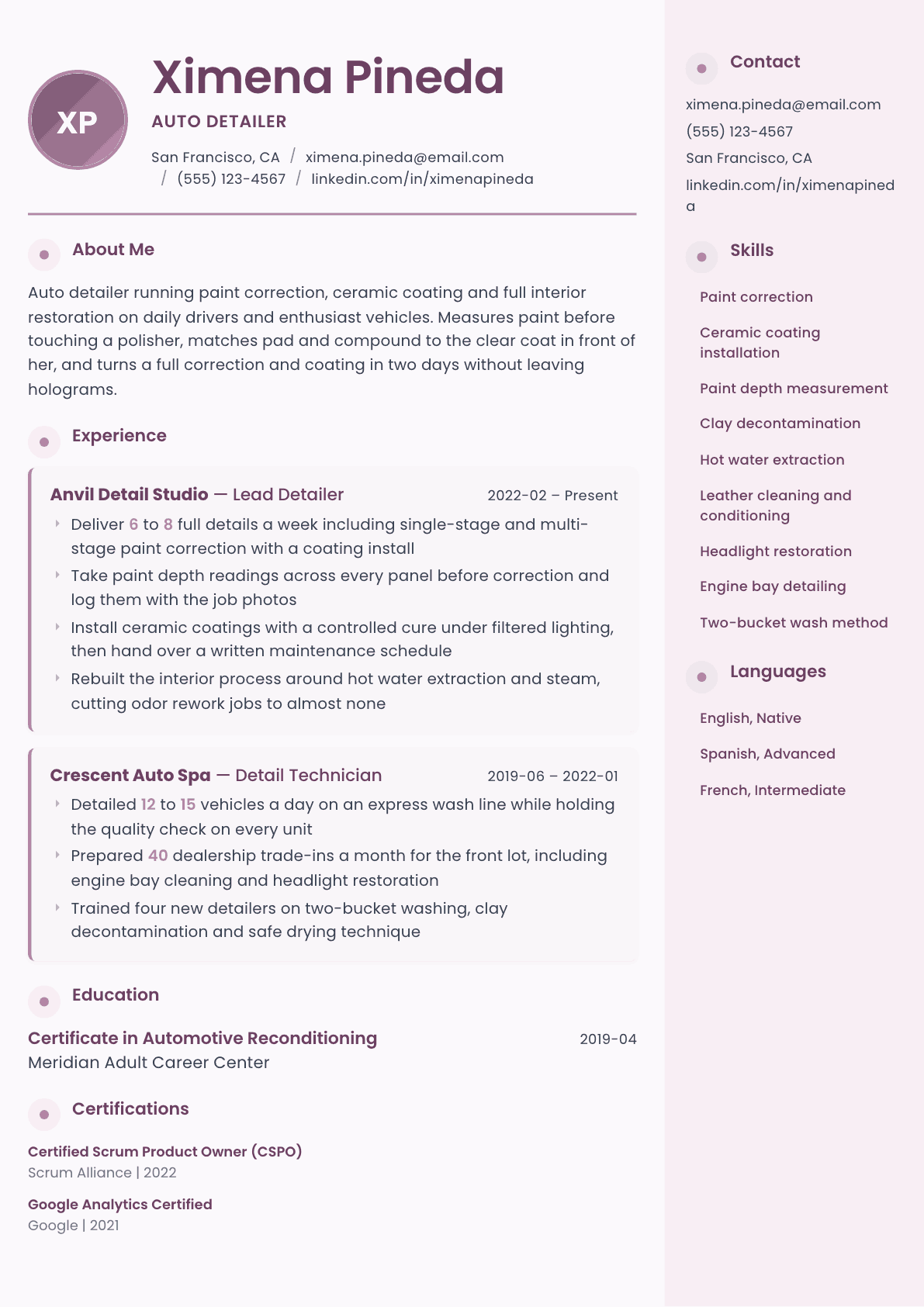
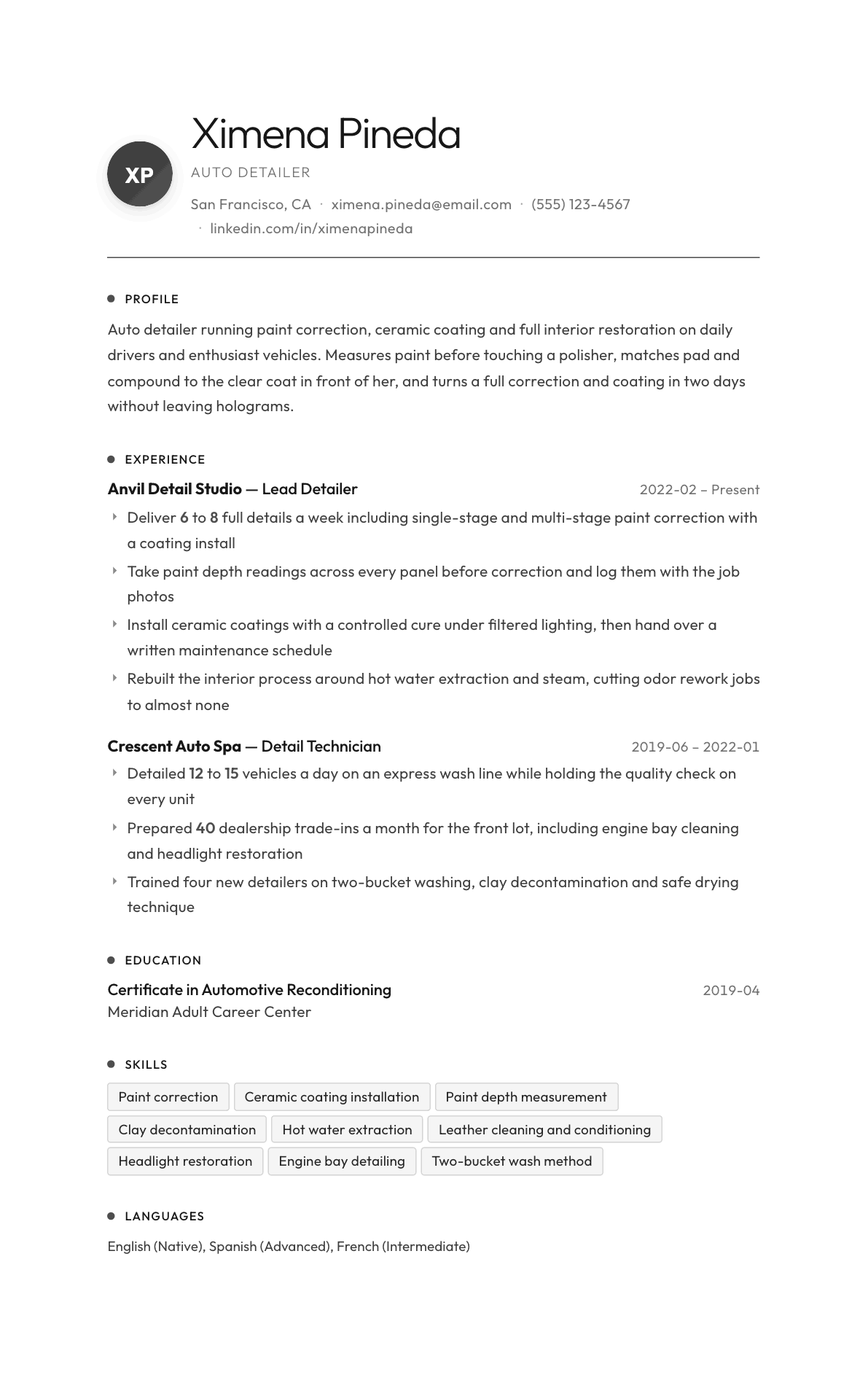
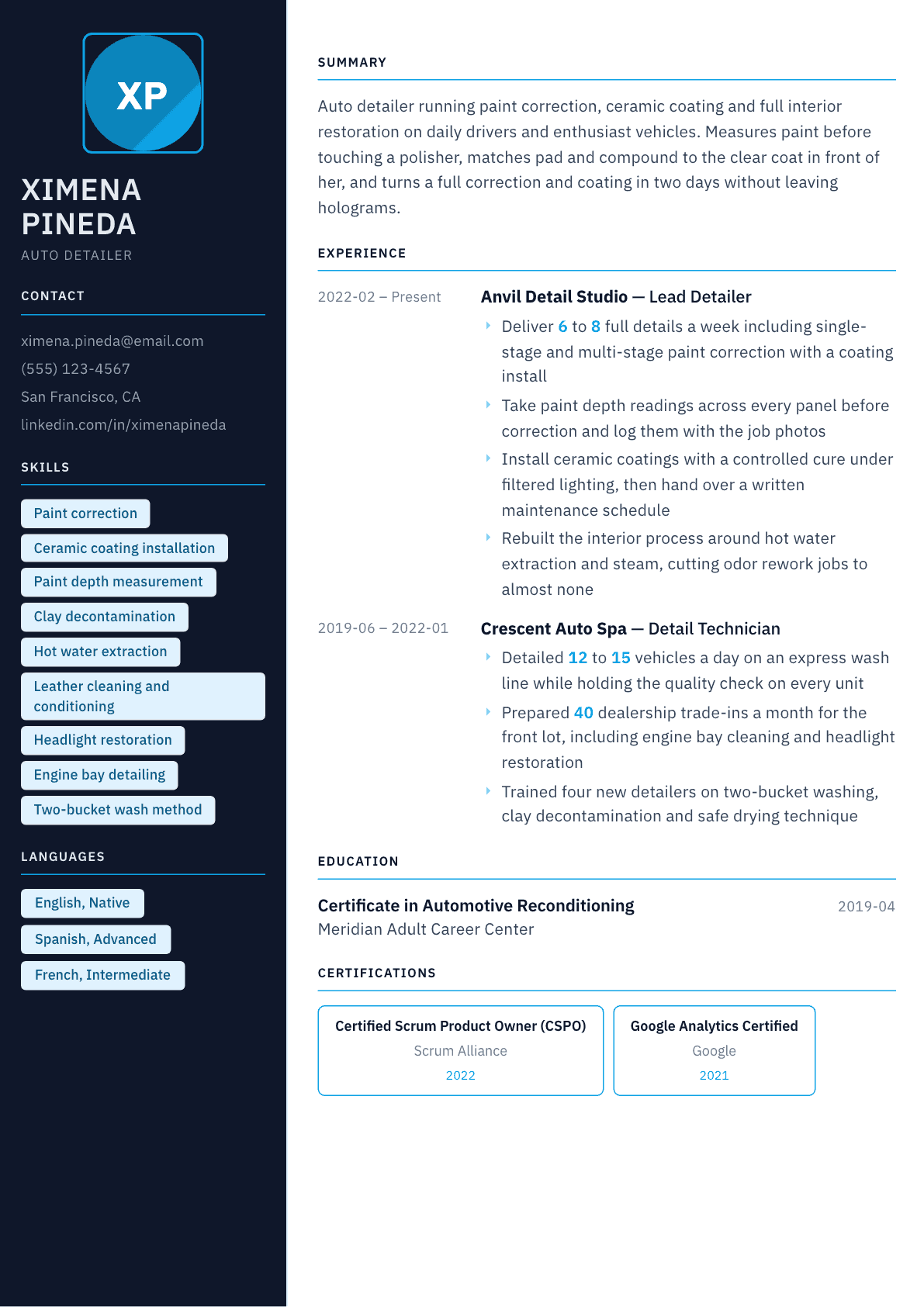
Example Auto Detailer summary
Auto detailer with six years across an express reconditioning line and a correction focused studio. Measures paint depth before every polish, matches pad and compound to the clear coat, and installs ceramic coatings under controlled lighting with a written maintenance handover. Also strong on interiors, using extraction and steam to clear odor jobs other shops send away. Trains new detailers on safe wash technique.
Skills to list on a Auto Detailer resume
- Multi-stage paint correction
- Dual action and rotary polishing
- Paint depth gauge readings
- Ceramic and graphene coating installation
- Paint protection film maintenance
- Clay bar and chemical decontamination
- Two-bucket and touchless washing
- Hot water extraction
- Steam cleaning
- Leather cleaning and conditioning
- Odor and ozone treatment
- Headlight restoration
- Engine bay cleaning
- Dealership reconditioning
- Client consultation and quoting
What actually gets this resume read
- Separate express reconditioning volume from correction work, because the two pay and hire on different terms.
- Name your polishers, pads and compounds, since a studio owner is checking whether you can start on their bench.
- Say whether you measure paint depth before correction, which is what separates a detailer from a buffer.
- List the coating brands you are trained to install, along with any manufacturer accreditation you hold.
- Give vehicles per day or per week so a manager can price your throughput against their booking schedule.
- Add interior restoration detail such as extraction, ozone treatment or leather repair rather than the word interior.
How to write a auto detailer resume
Detailing hires split into two very different jobs, and a resume that ignores the split gets filed under both and called by neither. One job is volume reconditioning: dealership trade-ins, rental returns and express wash lines, where the question is how many vehicles you finish in a day at an acceptable standard. The other is correction work: paint measured, defects removed, a coating installed on a car whose owner is paying real money for the result.
The person reading your resume knows which of the two he is filling. A studio owner wants to see paint depth readings, pad and compound choices and coating training. A reconditioning manager wants throughput, consistency and a clean quality check. Writing one page that mumbles about attention to detail satisfies neither, because every detailer claims that and the phrase carries no information.
This guide sets out how to write each section for an auto detailer, with summaries for a new detailer, a working technician and a studio lead, before and after bullets that replace vague claims with process, and the questions detailers ask when they move from a wash line into correction and coating work.
Format: one page, service menu and throughput up top
One page. Put a service block directly under the summary listing what you actually perform: wash and decontamination, single-stage and multi-stage correction, coating installation, interior extraction, odor treatment, headlight restoration, engine bay cleaning, protection film maintenance.
Next to it, give throughput. Vehicles a day on a reconditioning line, or full details a week in a studio. Those numbers are how an owner works out whether hiring you pays, and leaving them out forces him to assume the lower figure.
- Header: name, city and state, phone, email, and a portfolio link line if you keep before and after photos.
- Service block: correction levels, coating types, interior restoration services and any protection film work.
- Tools and products line: polisher types, pad systems, compounds, extractors, steamers and paint depth gauges.
- Then experience by shop type, then any manufacturer coating accreditation, then training and schooling.
Summary: which detailing you do, and to what standard
Three lines. Name the setting, the services you deliver at a professional standard, the throughput you hold and one habit that shows technical judgment. The habit is what separates you from someone who owns a polisher, so choose it carefully: measuring paint before correction is the strongest one available to most detailers.
If you hold coating accreditation from a manufacturer, put it in the first line. Installer status usually means training, a warranty process and a shop that can register a job, and it is a fact an owner can verify rather than a claim about quality.
Experience: process, not adjectives
Each job opens with the setting and the volume: express wash line, dealership reconditioning department, mobile operation or a correction studio, with vehicles per day or per week. Then describe how you work rather than what you cleaned.
For correction, the process is the story. Paint depth readings across panels, a test spot to select pad and compound, the correction stages, then an inspection under proper lighting for holograms and remaining defects. A detailer who writes that sequence has demonstrated more skill than one who claims to restore paint to showroom condition.
For interiors, name the equipment and the problems you solve: hot water extraction on fabric, steam on hard surfaces and vents, enzyme treatment on biological contamination, ozone or hydroxyl treatment for odor, and leather cleaning with conditioning rather than a dressing that shines and dries the hide.
Wash technique still belongs on the page, because most paint damage in a shop happens during washing. Two-bucket method, dedicated wash media, safe drying with filtered air or edgeless towels: those lines tell an owner you will not create the defects you are being paid to remove.
Coatings, warranties and the customer handover
If you install coatings, describe the whole job: decontamination, correction to the agreed level, panel wipe, install under controlled lighting, cure conditions and the maintenance schedule you hand over. Owners lose money on coatings that fail, and almost all failures trace back to preparation or cure, so a detailer who describes both is describing risk control.
The handover is worth its own line. A written maintenance plan, a walk around under lights with the customer and a scheduled follow-up inspection turn a one-off job into a returning client, and a studio owner reads that as revenue rather than politeness.
Skills and keywords a detailing employer searches for
Postings and searches use a consistent vocabulary: paint correction, ceramic coating, paint depth gauge, clay decontamination, dual action polisher, hot water extraction, odor removal, headlight restoration, reconditioning, two-bucket wash. Place each where the work is shown so an interview question about it has an answer behind it.
Add the business side if you have it: quoting, booking, upselling protection packages, managing product inventory and cost per vehicle. Detailing shops run thin margins on product and time, and a detailer who thinks about both is a candidate for lead rather than another pair of hands.
Auto Detailer resume summary examples
New detailer
Detailer with a season on an express reconditioning line, completing 10 to 12 vehicles a day including wash, decontamination, interior cleaning and headlight restoration. Trained on the two-bucket method and safe drying, and beginning single-stage correction under a lead detailer. Looking for a studio role with correction and coating work.
Three to five years
Auto detailer delivering six to eight full details a week including multi-stage paint correction and coating installation. Takes paint depth readings on every panel before polishing, selects pad and compound from a test spot, and rebuilt the interior process around extraction and steam so odor jobs stopped coming back.
Studio lead
Studio lead running a two-bay detailing shop with an accredited coating installer status. Sets pricing by correction level rather than by vehicle size, holds a repeat client base built on written maintenance plans and follow-up inspections, and has trained four detailers through safe wash technique and correction fundamentals.
Work experience bullets: before and after
Before: Detailed cars inside and out to a high standard.
After: Delivered six to eight full details a week covering decontamination, multi-stage correction, coating installation and full interior restoration on daily drivers and enthusiast vehicles.
The volume and the named services turn an unmeasurable claim into a description of a working week.
Before: Polished paint to remove scratches.
After: Took paint depth readings across every panel before correction, chose pad and compound from a test spot, then inspected under filtered lighting for holograms before the coating stage.
The measured sequence proves technical judgment where the original sentence describes a machine being used.
Before: Applied ceramic coatings for customers.
After: Installed coatings under controlled lighting after panel wipe, managed cure conditions overnight, and handed each client a written maintenance schedule with a follow-up inspection booked.
Preparation, cure and handover are where coatings succeed or fail, so naming them shows real installation experience.
Before: Cleaned car interiors including carpets and seats.
After: Rebuilt the interior process around hot water extraction and steam, adding enzyme treatment for biological contamination, which cut odor rework jobs to almost none.
A method change with a result behind it separates you from anyone who owns a vacuum.
Before: Prepared used cars for the sales lot.
After: Reconditioned 40 dealership trade-ins a month including engine bay cleaning, headlight restoration and single-stage correction, holding a quality check on every unit before it reached the front line.
Monthly volume with the actual services listed lets a reconditioning manager judge your pace and standard.
Hard skills
- Multi-stage paint correction
- Dual action and rotary polishing
- Paint depth gauge measurement
- Test spot and defect assessment
- Ceramic and graphene coating installation
- Chemical and clay decontamination
- Two-bucket and touchless washing
- Safe drying technique
- Hot water extraction
- Steam cleaning and enzyme treatment
- Odor and ozone treatment
- Leather cleaning and conditioning
- Headlight restoration
- Dealership reconditioning workflow
- Quoting and service package pricing
Soft skills
- Setting expectations before a correction rather than after it
- Working steadily through a long polish without rushing the last panel
- Explaining why a defect cannot safely be removed
- Keeping a bay organized enough to avoid cross contamination
- Handling an unhappy client without discounting the work reflexively
Certifications worth listing
- Certified Detailer (International Detailing Association)
- Skills Validated Detailer (International Detailing Association)
Mistakes that cost auto detailer candidates the interview
- Claiming attention to detail instead of describing a measurable process a shop owner can picture.
- Blending express wash volume and correction work together so neither type of employer sees what they need.
- Leaving paint depth measurement off the page, which is the clearest signal that you correct paint responsibly.
- Naming coatings without describing preparation, cure or handover, the three places installations actually fail.
- Ignoring interiors, even though odor and stain work is where many shops lose jobs to a competitor.
- Skipping wash technique, which tells an owner whether you will create defects while removing them.
Auto Detailer resume questions
Do I need certification to work as an auto detailer?
No shop requires it, but detailer certification gives an owner an outside reference for your skill, and coating manufacturers usually require their own installer training before a job can be registered under warranty. Both are worth listing when you have them.
How do I move from an express wash line to a detailing studio?
Lead with the technical habits rather than the volume. Safe wash and drying technique, decontamination, a test spot before correction and careful inspection tell a studio owner you can be trusted on a customer car worth more than the shop rate.
Should I include a photo portfolio?
Yes, and keep the link simple. Show before and after images of correction under consistent lighting, a range of paint colors and conditions, and at least one interior restoration. Vary the vehicles so nobody thinks you only work on one kind of car.
What numbers belong on a detailing resume?
Vehicles per day or full details per week, reconditioning volume per month, rework or comeback frequency, and repeat client share if you track it. Those give an owner a way to price your labor against the bookings he already has.
Is mobile detailing experience valued by shops?
It is, because it proves you can work without shop infrastructure and manage your own scheduling, water, power and product stock. Say how many jobs a day you completed and how you handled weather and lighting, since those are the constraints a shop owner will ask about.
Related resume examples
- Auto Mechanic Resume example
- Tire Technician Resume example
- Auto Body Technician Resume example
- Automotive Service Advisor Resume example
- Janitor Resume example
- Lube Technician Resume example