Facilities Technician Resume Examples: read this first
Write a Facilities Technician Resume for Commercial Buildings
By Mustafa Tarabya, founder of CVBooster · Published · Updated
Facilities technician resume example plus a guide to writing building systems, work order response, vendor escorts and compliance rounds.
Sample resumes for a facilities technician
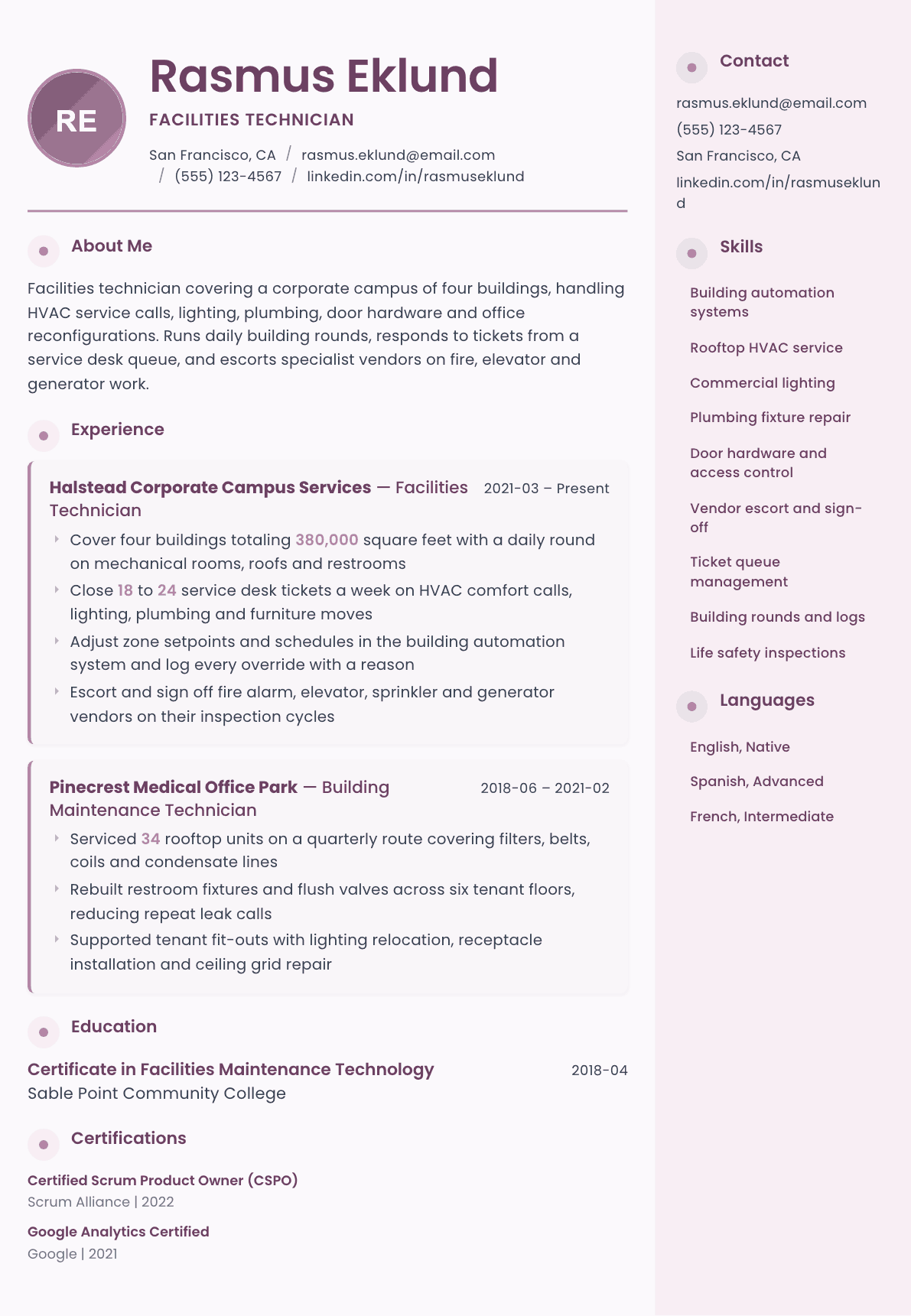
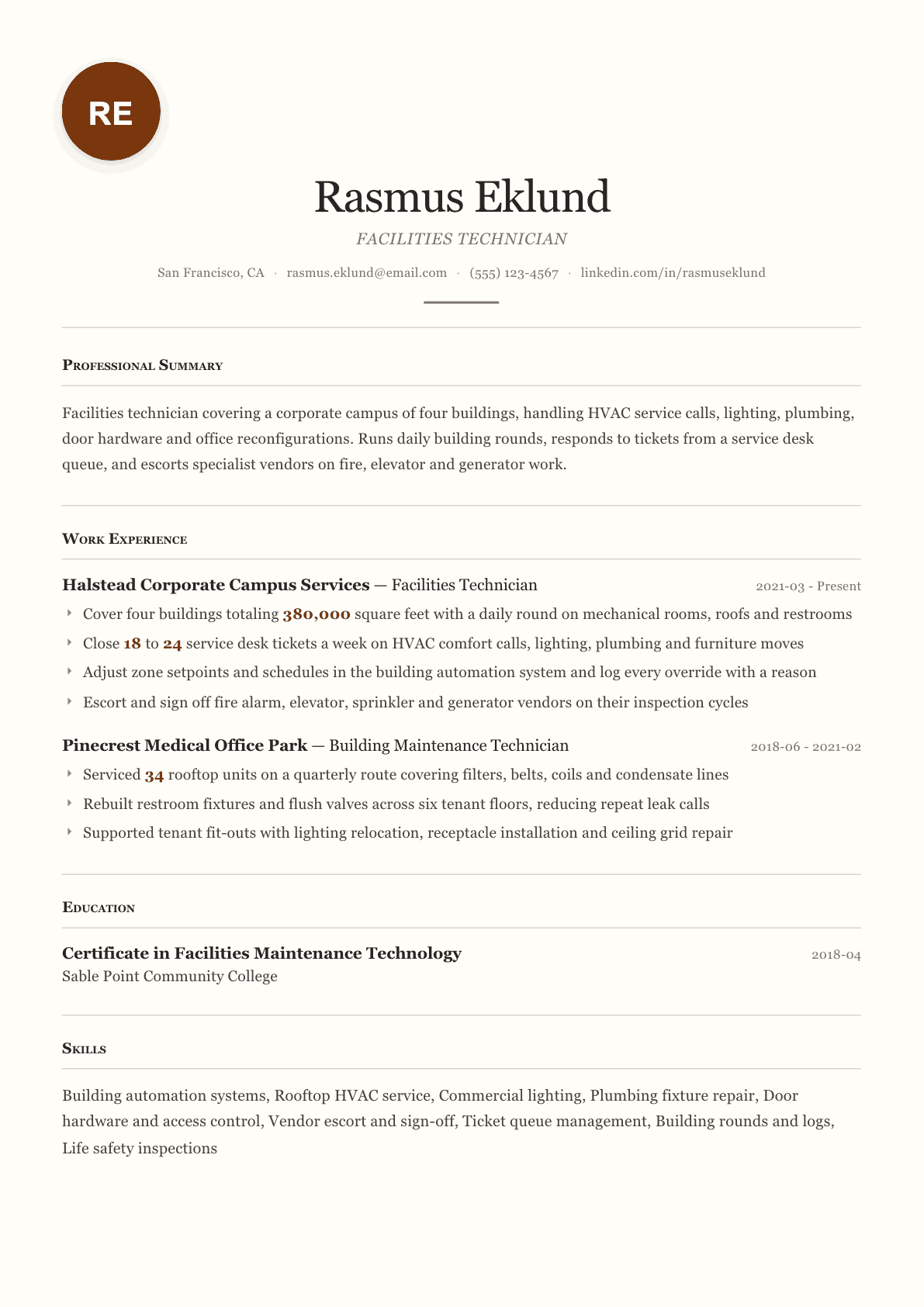
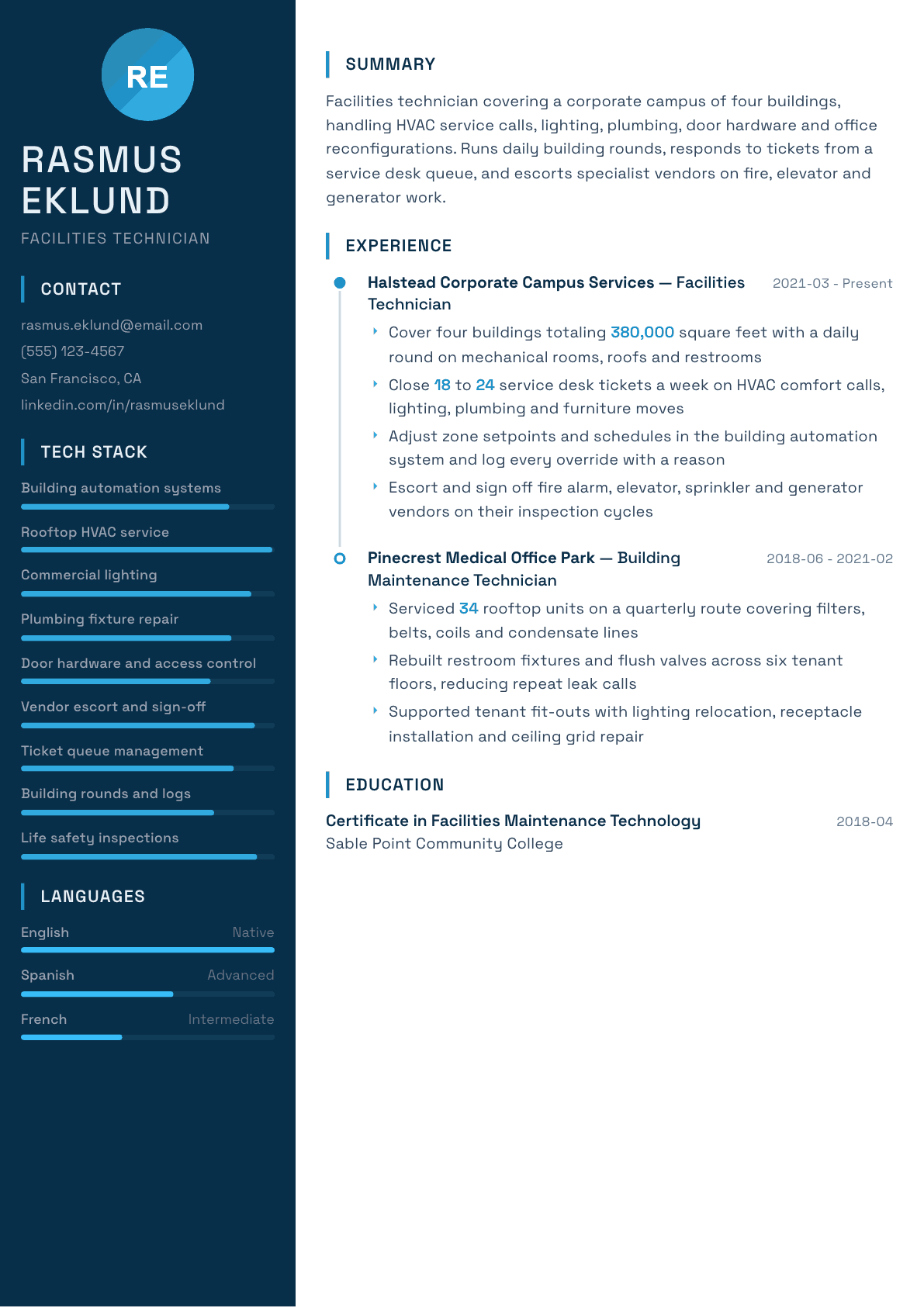
The same facilities technician content laid out in three CVBooster templates, so you can see what the finished document looks like before you write a word.
Example Facilities Technician summary
Facilities technician covering a four building corporate campus, closing service desk tickets on HVAC comfort calls, lighting, plumbing, door hardware and office reconfigurations. Runs a daily round on mechanical rooms, roofs and restrooms, adjusts schedules and setpoints in the building automation system with every override logged, and escorts fire, elevator, sprinkler and generator vendors through their inspection cycles.
Skills to list on a Facilities Technician resume
- Building automation and setpoints
- Rooftop and split HVAC service
- Commercial lighting and ballast work
- Plumbing fixtures and drain clearing
- Electrical receptacles and circuits
- Door hardware and access control
- Fire alarm and sprinkler awareness
- Emergency generator checks
- Preventive maintenance routes
- Vendor coordination and escorts
- Work order and ticket systems
- Building rounds documentation
- Tenant fit-out support
- Roof and drainage inspection
What actually gets this resume read
- Give the building count and the total floor area you cover, because scope is the first thing a manager checks.
- Name the building automation system you work in and say what you adjust rather than only that you use it.
- Describe your daily round: mechanical rooms, roofs, restrooms, and what you record on each pass.
- List the specialist vendors you escort and sign off, from elevator to fire alarm to generator crews.
- Show tenant work such as fit-outs, furniture moves and lighting changes, which fills a real part of the week.
- Include the ticket system and the response times you are measured against on comfort and safety calls.
How to write a facilities technician resume
A facilities manager hiring a technician is protecting a workplace, not a machine. His day is a queue of comfort complaints, a fire alarm inspection he has to escort, a conference room that has to be reconfigured before a client visit, and a roof drain he hopes is clear. He wants a technician who can carry that mix without needing to be told which item matters most.
The resumes that lose out describe cleaning and small repairs and stop. The ones that win describe scope and systems: how many buildings, how much floor area, which building automation platform, what a daily round covers, which vendors get escorted, and how many tickets close in a week. A facilities technician job is broad by design, and the page has to show breadth without turning into a list.
This guide covers the layout facilities managers scan, how to write building systems work credibly, how to present vendor and compliance duties, the certifications worth holding, and the questions technicians ask when moving between corporate campuses, medical offices and industrial sites.
Format: one page, portfolio scope and systems visible immediately
One page, reverse chronological. Under the contact line, state the portfolio you have covered: number of buildings, total floor area, occupancy type and whether the site ran a service desk. Facilities work varies enormously by building type, and a manager sorting resumes uses that line first.
Follow with a systems block, because this role sits across many. HVAC at the level you touch it, electrical, plumbing, lighting, door hardware and access control, life safety, and the building automation platform. Then a vendor block, since escorting and signing off specialist contractors is a real part of the week and few candidates mention it.
- Portfolio line: buildings, floor area, occupancy type, and whether the campus is multi-tenant.
- Systems block: the building systems you service, with the depth you go to on each.
- Automation line: the platform you work in and whether you adjust schedules or only read points.
- Vendor block: fire alarm, sprinkler, elevator, generator, pest, roofing, and what you sign off.
- Ticket line: the service desk platform, weekly volume, and the response standards you work to.
Summary: portfolio, systems, tickets, rounds
Three lines. Name the portfolio, the systems you cover, the weekly ticket volume, and the daily round you run. Those four facts tell a facilities manager whether you can hold his site without a second technician.
The round is worth naming specifically because it separates a reactive technician from a preventive one. A technician who walks mechanical rooms, roofs and restrooms every morning and logs what he sees catches leaks, failed belts and blocked drains before an occupant reports them, and every facilities manager has been burned by the alternative.
Experience: the round, the queue, the vendors, the projects
Head each job with the portfolio, then write bullets against the four things that fill a facilities technician week. The daily round and what it covers. The ticket queue with volume and the categories that dominate it. Vendor escorts and inspection cycles. And the small projects: office reconfigurations, furniture moves, lighting changes and tenant fit-out support.
Write comfort calls carefully. Every facilities technician handles them and almost nobody writes them well. The strong version names where you resolve them: at the terminal box, at the thermostat, at the zone schedule, or by finding a blocked diffuser. Saying you resolved comfort complaints without saying how tells a manager nothing about your HVAC depth.
Include the compliance work you support even if you do not own it. Fire extinguisher checks, emergency lighting tests, eyewash station flushes and generator run logs are unglamorous, and a technician who keeps them current is the one a manager stops worrying about.
- Daily round: areas covered, what you inspect, and what gets logged.
- Ticket volume with the dominant categories and any response standard you were measured on.
- Building automation work: schedule changes, setpoint adjustments, overrides logged with a reason.
- Vendor escorts and inspection cycles, with what you verify before signing.
- Project support: reconfigurations, moves, lighting changes, tenant fit-outs.
Safety, access and the trust part of the job
Facilities technicians hold keys, access cards and alarm codes for buildings full of other people's property. Say so on the page. Key control, after-hours access, alarm setting and the discipline of logging who entered which space are all part of why a manager hires a specific person rather than the cheapest contract.
Then cover the physical safety detail: elevated work on lifts and ladders, roof access, electrical work boundaries, chemical storage and hazard communication, and asbestos awareness in older buildings. A manager with an older portfolio reads that last one closely even when the advert never mentions it.
Skills and keywords a facilities posting screens on
Facilities adverts reuse a specific vocabulary: building systems, preventive maintenance, work orders, building automation, HVAC, life safety, vendor management, tenant requests, and rounds. Mirror the exact terms from the posting in your blocks and prove each with a bullet.
Name the software. Facilities departments run on a service desk platform and often a separate automation front end, and a technician who already knows the ones in use starts producing in his first week rather than his third.
Facilities Technician resume summary examples
First facilities role
Facilities maintenance certificate holder with two years of building repair work covering lighting, plumbing fixtures, door hardware and filter changes on rooftop units. Comfortable on lifts and ladders, holds a clean driver record, and available for early starts. Seeking a first facilities technician seat on a commercial campus.
Four years in
Facilities technician covering four buildings on a corporate campus, closing 18 to 24 service desk tickets a week on HVAC comfort calls, lighting, plumbing and reconfigurations. Runs a daily round on mechanical rooms, roofs and restrooms, adjusts schedules in the building automation system, and escorts fire, elevator and generator vendors.
Lead facilities technician
Lead facilities technician for a mixed office and laboratory site, directing two technicians and the vendor calendar while carrying a full ticket load. Rebuilt the preventive route for rooftop units and pumps, and cut repeat comfort complaints on two floors by rebalancing terminal boxes and correcting zone schedules.
Work experience bullets: before and after
Before: Maintained several buildings on a corporate campus.
After: Covered four buildings totaling 380K square feet with a daily round on mechanical rooms, roofs, restrooms and stairwells, logging every finding before the tickets opened.
Portfolio size plus a described round shows both scope and a preventive habit in a single line.
Before: Responded to temperature complaints from staff.
After: Resolved comfort calls at the terminal box where possible, checking damper position, reheat valve travel and zone schedule before touching a rooftop unit or calling a vendor.
Naming where and how you resolve comfort calls demonstrates real HVAC depth instead of a ticket count.
Before: Worked with the building automation system.
After: Adjusted zone setpoints and occupancy schedules in the building automation system and logged every override with a reason and an expiry, so forgotten overrides stopped driving after-hours energy use.
The override discipline turns a system name into a practice a facilities manager immediately values.
Before: Coordinated with outside contractors.
After: Escorted and signed off fire alarm, sprinkler, elevator and generator vendors through their inspection cycles, verifying the work and filing the reports for the compliance binder.
Verification and recordkeeping are the parts a manager actually needs, and coordination alone implies neither.
Before: Helped with office moves and setups.
After: Supported tenant fit-outs and departmental moves with lighting relocation, receptacle installation, ceiling grid repair and furniture reconfiguration, working evenings to avoid occupied hours.
The specific trades and the timing show project support rather than lifting boxes.
Hard skills
- Building automation schedules and setpoints
- Rooftop and split system HVAC service
- Terminal box and VAV troubleshooting
- Commercial lighting and controls
- Plumbing fixtures and drain clearing
- Electrical receptacles, circuits and panels
- Door hardware and access control
- Fire alarm and sprinkler system awareness
- Emergency generator and fire pump checks
- Preventive maintenance routes
- Work order and service desk systems
- Vendor escort and inspection sign-off
- Roof, drain and building envelope inspection
Soft skills
- Judging which ticket matters most without being told
- Working around occupied offices quietly
- Explaining a delay to an occupant before they escalate
- Holding keys and codes with visible discipline
- Noticing the fault nobody has reported yet
Certifications worth listing
- Facilities Management Professional (FMP) (International Facility Management Association)
- EPA Section 608 Technician Certification (United States Environmental Protection Agency)
- Systems Maintenance Technician (SMT) (BOMI International)
- OSHA 10-Hour General Industry (Occupational Safety and Health Administration)
Mistakes that cost facilities technician candidates the interview
- Describing the job as general repairs without giving building count, floor area or occupancy type.
- Naming the building automation system without saying what you change inside it.
- Writing comfort calls as a volume with no explanation of where you resolve them.
- Leaving vendor escorts and inspection records off the page when they fill a real part of the week.
- Ignoring key control and after-hours access, which is a trust question every manager weighs.
- Listing every trade at equal depth so a manager cannot tell what you do alone and what you call out.
Facilities Technician resume questions
What is the difference between a facilities technician and a building engineer?
A building engineer usually operates a central plant with chillers and boilers and carries the licenses that go with it. A facilities technician covers a wider mix of systems at less depth, plus tenant work, vendors and projects. Match the posting rather than the title you prefer.
How much HVAC knowledge does a facilities technician need?
Enough to service rooftop units, change filters and belts, clear condensate, and troubleshoot a comfort call to the terminal box. Refrigerant work requires certification, so hold that credential if you want the broader postings to accept your application.
Should I list the software I use?
Yes, both the service desk platform and the building automation front end. Facilities departments are picky about this because retraining a technician on unfamiliar systems delays every metric they report, and a matching name often decides a shortlist.
How do I move from residential maintenance into commercial facilities?
Lead with the trades that transfer directly, then add anything commercial you have touched: rooftop units, emergency lighting, sprinkler awareness or access control. Be clear that you understand occupied-hours discipline, since working around staff is the biggest behavioral change.
Is a facilities certification worth getting early?
A systems maintenance credential or an entry facilities management certificate helps when you have limited commercial experience, because it shows you know building systems as a set rather than as isolated repairs. Add a refrigerant card as soon as you can, since it widens the postings you qualify for.
Related resume examples
- Facilities Manager Resume example
- HVAC Technician Resume example
- Facilities Coordinator Resume example
- Building Engineer Resume example
- Locksmith Resume example
- Pest Control Technician Resume example