Hostess Resume Examples: free score, then the gap list
Build a Hostess Resume Managers Read to the Last Line
By Mustafa Tarabya, founder of CVBooster · Published · Updated
A hostess resume sample with reservation and cover numbers, the skills upscale restaurants look for, plus tips for a first hospitality job.
Sample resumes for a hostess
The same hostess content laid out in three CVBooster templates, so you can see what the finished document looks like before you write a word.
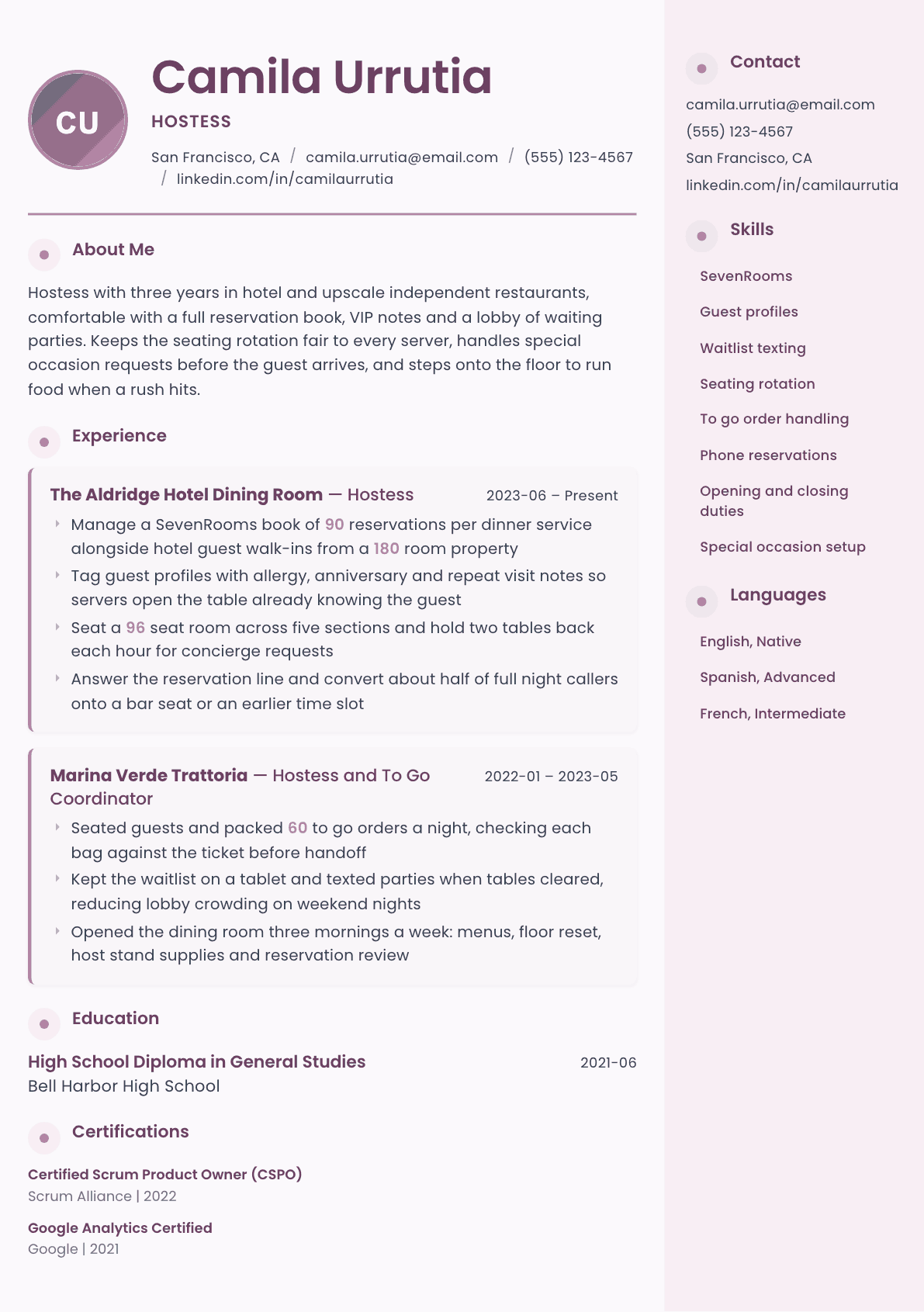
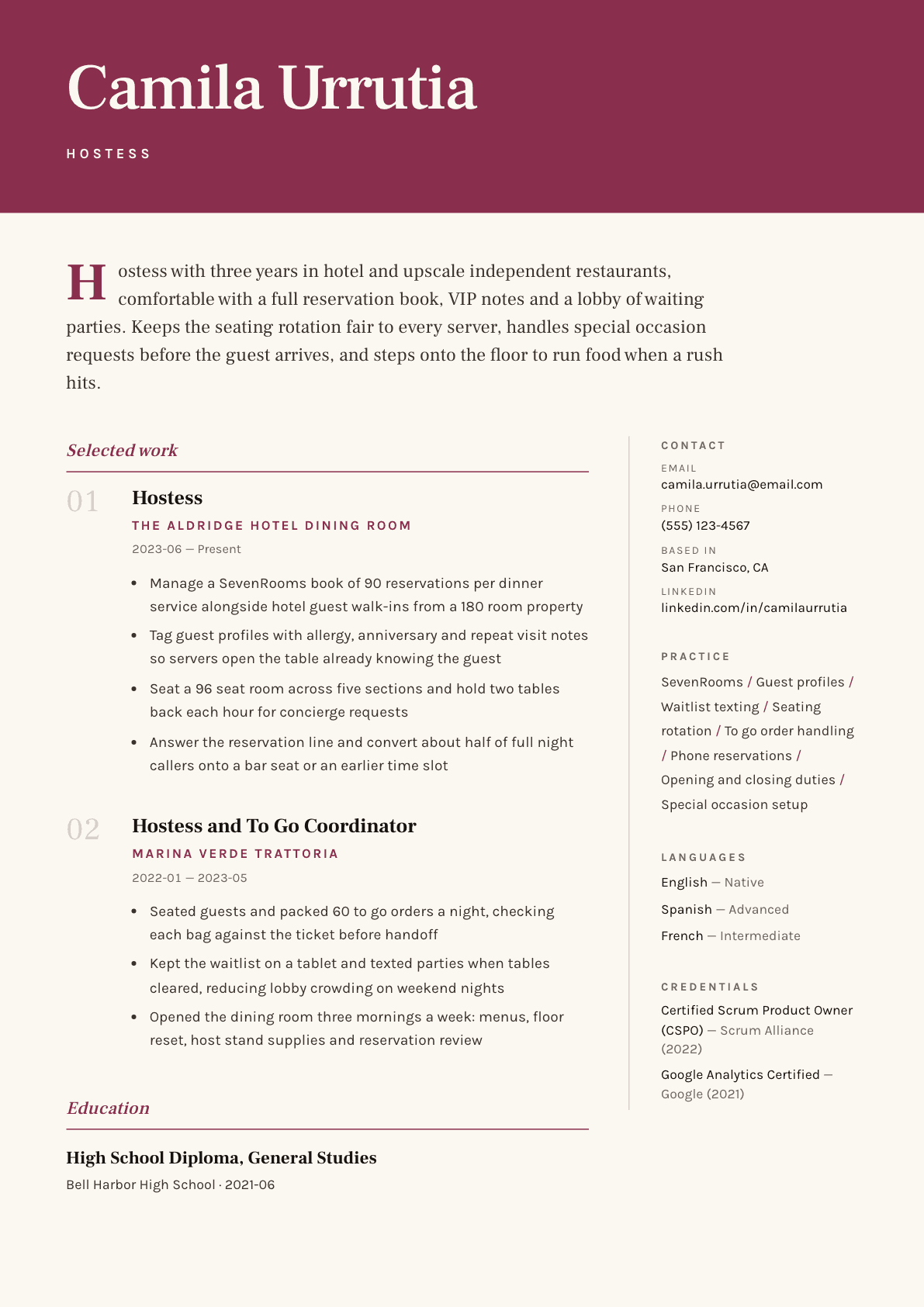
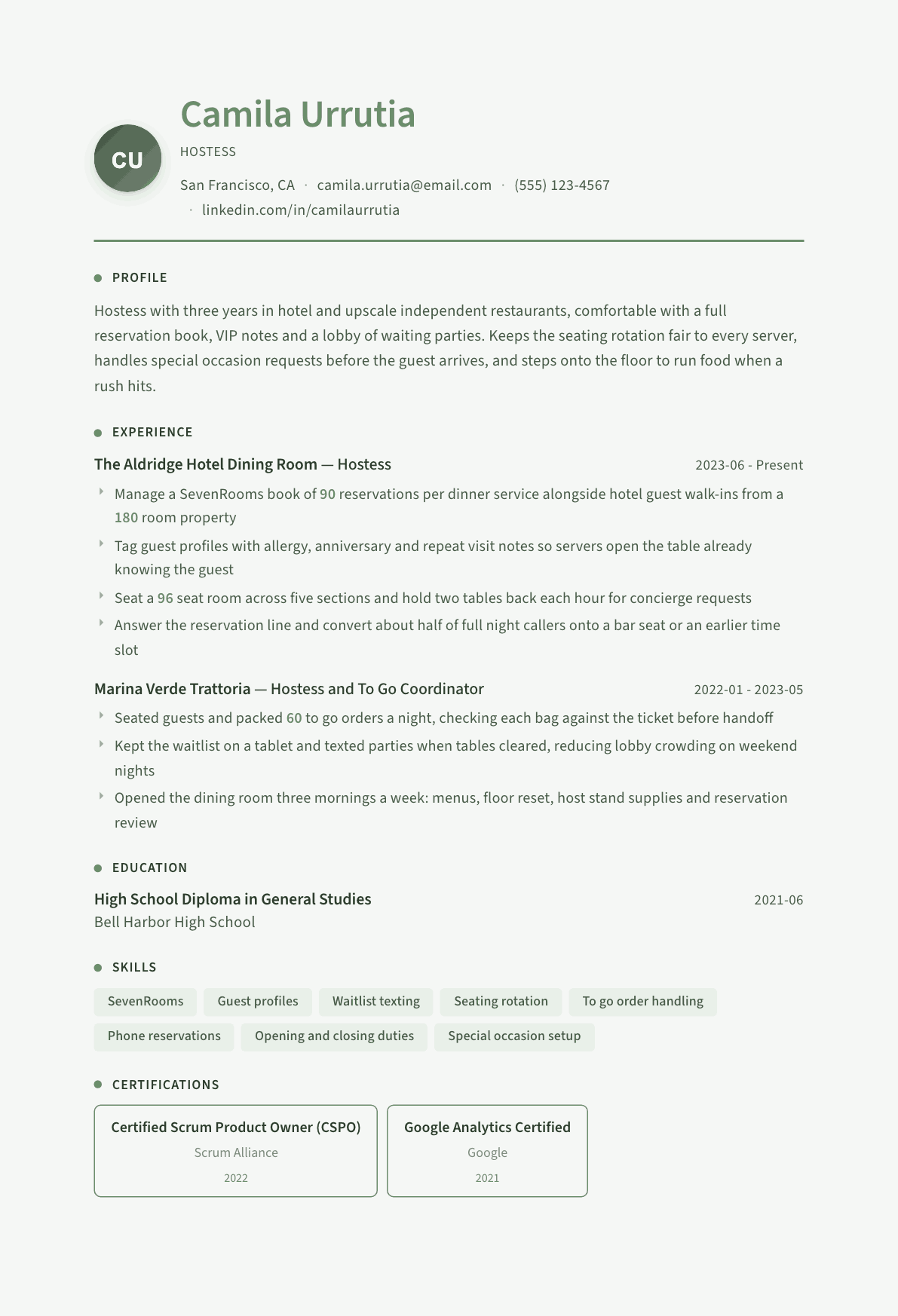
Example Hostess summary
Hostess with two years in a busy independent restaurant, managing an OpenTable book, a weekend waitlist and a to go window at the same time. Balances five server sections through three full turns a night, handles allergy and celebration notes before the party sits, and calms waiting guests with honest quote times. Food handler card current, open availability including holidays.
Skills to list on a Hostess resume
- Reservation systems
- Guest greeting
- Waitlist management
- Seating charts
- Phone and text guest contact
- VIP and allergy notes
- To go order coordination
- Menu knowledge
- Upselling bar seating
- Opening and closing checklists
- Conflict de-escalation
- Cash and card handling
- Team communication
- Event and holiday service
What actually gets this resume read
- Lead with the room size and the reservation system, since those two facts tell a manager how much volume you have carried.
- Describe how you protect the seating rotation, because an unbalanced floor is the complaint servers bring to management first.
- Include to go coordination if you have done it, as many restaurants now attach that duty to the host stand.
- Show you can take a reservation by phone and read a guest note, not only tap a screen at a podium.
- If this is your first job, use school, club or volunteer experience where you greeted people and handled a schedule.
- Keep the resume to one page and put availability and any food handler card in the header area.
How to write a hostess resume
The hostess application pile at an upscale or hotel restaurant is deep, and almost every one of them says the same three things: friendly, organized, works well with others. The manager reading them is not looking for a personality description. She is looking for evidence that you have stood in front of a full book on a Friday with a lobby of waiting parties, a concierge asking for two tables, and a server telling you their section is buried.
What separates the applications that get a call is specificity about the systems and the room. A hostess who names the reservation platform, the number of covers per service, the number of sections she balances and the guest notes she tags is describing a job she has actually done. That is checkable in an interview, which is exactly why it gets one.
Below is how to build each part of the page, from the header through the skills block, plus three example summaries, rewrites of the bullets applicants send most, and answers to the questions that come up when hostessing is your first job or your route into hotel work.
Format: one page, credentials and availability in the header
Reverse chronological, one page, one readable font. Restaurant hiring runs on speed, and a manager who cannot find your most recent job in three seconds moves on. Skip the photo and the graphic skill meters, because neither means anything to a manager and both crowd out the detail that does.
Put your city, phone, email, availability and any current food handler card directly under your name. Open availability including holidays is a hiring argument on its own, especially for hotel dining rooms that never close and for independent restaurants staffing a holiday season.
- Name, city and state, phone, email, availability, food handler card if current.
- Order: summary, experience, skills, education, certifications, languages.
- Add languages as their own short line when the restaurant serves an international or hotel guest base.
Summary: the room, the book, and one thing you protect
Lead with the size of the room and the reservation system, because those two facts describe the volume you have carried better than any adjective. Then add one responsibility you own beyond seating: guest profile notes, the to go window, the concierge hold, the phone line.
Keep it to about three sentences and finish with availability. A hostess who states weekend, evening and holiday coverage answers the question the manager was going to ask on the phone, which is often what moves an application from the pile to the interview list.
Experience: reservations, rotation, and the guest before they arrive
For each job, open with the setting: hotel dining room, independent trattoria, steakhouse, and give the seat count, the section count and the reservation volume per service. A line that reads ninety reservations per dinner alongside walk-ins from a one hundred eighty room hotel explains your day better than four bullets of duties.
Then write the bullets around three things a manager cares about. First, how you protect the seating rotation, because an unbalanced floor is the complaint servers bring to management before anything else. Second, how you prepare the table before the guest sits: allergy tags, anniversary notes, repeat visit flags, so the server opens the table already knowing who is in front of them. Third, how you convert a no rather than losing the guest: a bar seat, an earlier slot, a following week booking.
If you have run to go orders, packed bags against tickets, or texted a waitlist from a tablet, put it in. Those duties sit at the hostess stand in a growing number of restaurants and hiring managers screen for them directly.
Skills: systems, guest data, and the second station you can cover
Name the reservation platforms and the point of sale first. Then list the guest data work: profile tagging, allergy and occasion notes, VIP flags. Then the extra stations you can hold when the floor gets busy: running food, to go coordination, bussing a table on the way past the podium. A hostess who can cover two stations is worth more on a schedule than one who can only stand at the door.
Keep the soft skills out of this list and put them in the experience bullets where they are demonstrated. De-escalating a party that has waited past its quote is a skill, but it only reads as one when it is attached to what you actually said and did.
A first job, school experience, and what counts
A high school diploma is enough for most hostess postings, so list it plainly and move on. If your restaurant history is thin, the experience section should still not be empty. Club officer roles where you ran a sign up sheet, volunteer work where you greeted arrivals, a family business where you answered the phone and took bookings, a school event where you seated an audience: all of these show the same three abilities, which are greeting under pressure, holding a schedule and keeping a list accurate.
Describe them the way you would describe restaurant work: the number of people, the system you used, and what you were responsible for when something went wrong. That framing is what turns thin history into a page a manager will read to the last line.
- Give volume for every non restaurant role: arrivals per day, bookings per week, seats filled.
- Name any scheduling, booking or ticketing tool you used, even a shared spreadsheet.
- Add a short availability line, because open weekends can outweigh a shorter work history.
Hostess resume summary examples
First hospitality job
Recent high school graduate seeking a first hostess position. Ran the sign in desk for a community center serving 150 visitors a day, managed a booking calendar for four rooms, and handled member calls. Food handler card current, open availability including evenings, weekends and holidays.
Two years in a busy room
Hostess with two years in an independent restaurant, managing a reservation book, a weekend waitlist and a to go window at once. Balances five server sections through three full turns a night, handles allergy and celebration notes before the party sits, and calms waiting guests with honest quote times.
Hotel dining room
Hostess with three years in hotel and upscale independent dining, holding a 90 reservation dinner book alongside walk-ins from a 180 room property. Tags guest profiles with allergy, anniversary and repeat visit notes, holds tables back for concierge requests, and steps onto the floor to run food during a rush.
Work experience bullets: before and after
Before: Welcomed guests and showed them to their seats.
After: Seated a 96 seat dining room across five sections through three turns a night, holding two tables each hour back for concierge and manager requests.
Section count, turns and the concierge hold describe a real seating system instead of the act of walking someone to a table.
Before: Used the reservation system to book tables.
After: Managed a 90 reservation dinner book in SevenRooms, tagging every profile with allergy, anniversary and repeat visit notes before service.
Naming the platform and what you did inside it shows guest data work, not just data entry.
Before: Told guests how long the wait would be.
After: Kept the waitlist on a tablet and texted parties the moment a table cleared, which thinned the lobby crowd on weekend nights and kept quotes honest.
The method and the effect on the room replace a claim any applicant could make.
Before: Answered the phone for the restaurant.
After: Worked the reservation line and moved callers who wanted a fully booked slot onto bar seating or an earlier time rather than turning them away.
This shows you save covers on the phone, which is revenue the manager can picture.
Before: Helped with takeout orders.
After: Packed and checked 60 to go orders a night against the ticket before handoff, catching missing sides and sauces before the guest left the building.
Volume plus the verification step turns a side duty into proof of accuracy under pressure.
Hard skills
- Reservation systems
- Waitlist management
- Seating charts
- Guest profile tagging
- Allergy and VIP notes
- Phone and text guest contact
- To go order coordination
- Point of sale entry
- Menu knowledge
- Bar seat upselling
- Opening and closing checklists
- Event and holiday service
Soft skills
- Conflict de-escalation
- Warm first impression
- Discretion with guest information
- Working a full lobby calmly
- Coordination with servers
- Attention to small details
Certifications worth listing
- ServSafe Food Handler (National Restaurant Association)
- ServSafe Allergens (National Restaurant Association)
Mistakes that cost hostess candidates the interview
- Filling the summary with adjectives when the manager is looking for a seat count and a reservation platform.
- Never mentioning the seating rotation, which makes it look like you have greeted guests but not managed a floor.
- Leaving out to go coordination, a duty many restaurants now attach to the stand and screen for on purpose.
- Listing personality traits in the skills block instead of the systems and stations a scheduler needs to know about.
- Hiding availability at the bottom of the page when it is often the deciding factor between two similar applicants.
- Adding a photo and rating bars, which crowd out the specifics and give a manager nothing to ask about in an interview.
Hostess resume questions
What should a hostess put on a resume with no experience?
Any setting where you greeted arrivals, held a list or answered a phone: a school office, a front desk, retail during a holiday rush, a volunteer event. Give the daily number of people and the booking or scheduling tool you used, then state your availability.
Is there a difference between a host and a hostess resume?
No difference in content or structure. Many restaurants post the same job under both words, so write one page and match your job title line to the wording of the posting you are answering. The room size, systems and volume matter far more than the title.
Should I include my school activities?
Yes if you are early in your work history and the activity involved people, schedules or money: student council events, ticket sales, club officer roles, sports team management. Describe them with volume and responsibility rather than as a list of club names.
How do I get from hostess into a server job?
Show menu knowledge, point of sale entry and any food or drink running you have done, because those are the three gaps a manager worries about. A hostess who already rings orders and knows the menu is the internal candidate for the next server opening.
Do upscale restaurants expect anything extra on the page?
They look for guest profile work, discretion with VIP and allergy information, wine or menu familiarity, and experience with a reservation book rather than a walk-in list. Naming a tasting menu, a hotel property or a private dining room signals that setting.
Related resume examples
- Restaurant Manager Resume example
- Barista Resume example
- Host Resume example
- Server Resume example
- Hotel Receptionist Resume example
- Fine Dining Server Resume example